
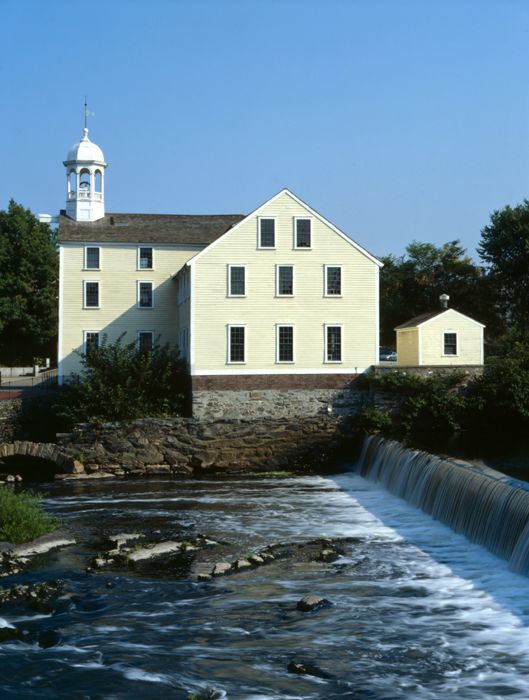
Slater Mill, Pawtucket, Rhode Island, by the Historic American Building Survey.
The Industrial Revolution was a period of transition to new manufacturing processes, spanning approximately from 1760 to 1830. During this time, goods production moved from home businesses, where products were generally crafted by hand, to machine-aided production in factories. This revolution, which involved significant changes in transportation, manufacturing, and communications, transformed the daily lives of Americans as much as—and arguably more than—any single event in U.S. history.
An early landmark moment in the Industrial Revolution came near the end of the 18th century when Samuel Slater brought new manufacturing technologies from Britain to the United States and founded the first U.S. water-powered cotton mill in Pawtucket, Rhode Island. Like many of the mills and factories that sprang up in the next few decades, Slater’s Mill was powered by water, which initially confined industrial development to the Northeast. The concentration of industry in the Northeast also facilitated the development of transportation systems, such as railroads and canals, which encouraged commerce and trade.
Alexander Hamilton was a major supporter of the Industrial Revolution. After the American Revolution ended, he began promoting his views on the economic needs of the new nation. He was concerned about the lack of industry in the United States, which was prohibited by English law during colonial times. Hamilton believed that a robust industrial system was the most effective way for the United States to achieve financial independence and establish a global presence.
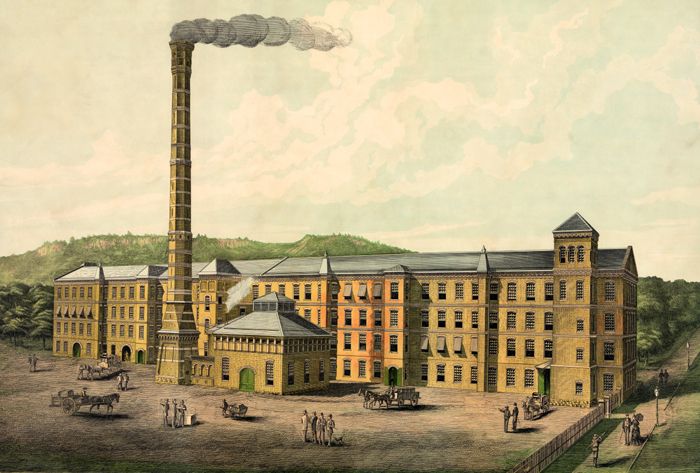
Barbour’s Flax Thread Works. Patterson, New Jersey.
After Hamilton was appointed as the United States’ first Secretary of the Treasury, he continued to advocate for the establishment of industry in America. Toward that end, he co-founded the “Society for Establishing Useful Manufactures,” which would be operated by private interests but would have the support of the government. The organization’s charter called for the society to both manufacture goods and trade in them. In 1792, the group purchased 700 acres of land above and below the Great Falls, establishing the city of Paterson, New Jersey. It was America’s first planned industrial city, and here, the methods for harnessing water power for industrial use were pioneered. Many of the factories established in the young United States enabled it to become a significant economic player on the world stage.
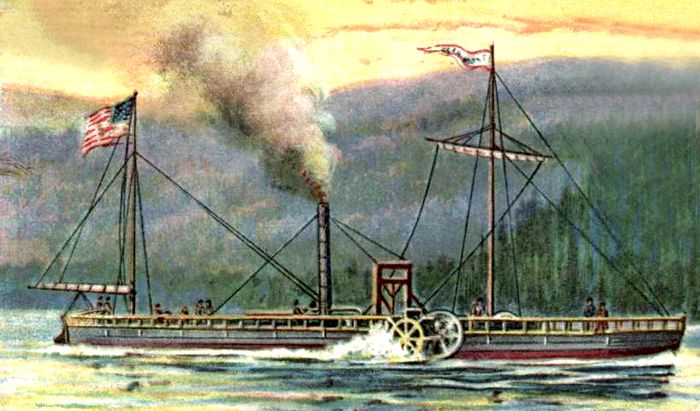
Robert Fulton’s Steamboat on the Hudson River.
The technological innovations that would mark the United States in the 19th century began with Robert Fulton’s establishment of steamboat service on the Hudson River, Samuel F.B. Morse’s invention of the telegraph, and Elias Howe’s invention of the sewing machine, all of which occurred before the Civil War.
Following the war, industrialization in the United States increased at a breakneck pace. This period, encompassing most of the second half of the 19th century, has been referred to as the Second Industrial Revolution or the American Industrial Revolution. Over the first half of the century, the country expanded significantly, and the newly acquired territory was rich in natural resources. Completing the first transcontinental railroad in 1869 was a significant milestone, as it facilitated the easier transportation of people, raw materials, and goods. The United States also had vast human resources: between 1860 and 1900, approximately 14 million immigrants arrived in the country, providing workers for various industries.
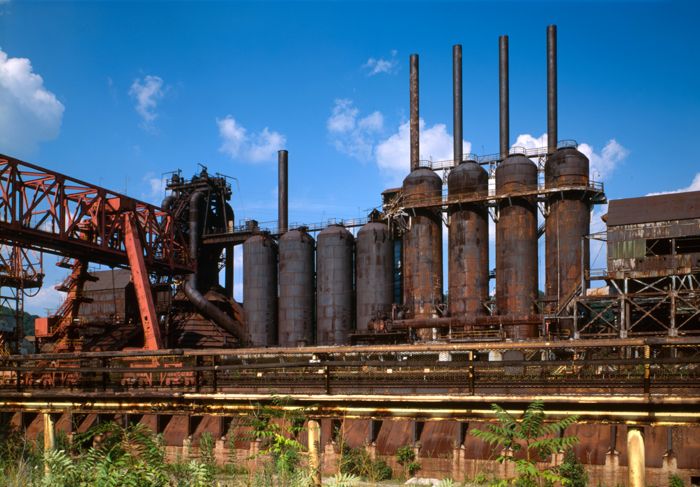
Andrew Carnegie’s U.S. Steel Works, Duquesne, Pennsylvania, by the Historic American Buildings Survey.
The American industrialists overseeing this expansion were willing to take risks to ensure the success of their businesses. Andrew Carnegie established the first steel mills in the U.S. to use the British “Bessemer process” for mass-producing steel, becoming a titan of the steel industry in the process. He acquired business interests in the mines that produced the raw material for steel, the mills and ovens that created the final product, and the railroads and shipping lines that transported the goods, thus controlling every aspect of the steelmaking process.
Other industrialists, including John D. Rockefeller, merged the operations of many large companies to form a trust. Rockefeller’s Standard Oil Trust came to monopolize 90% of the industry, severely limiting competition. These monopolies were often accused of intimidating smaller businesses and competitors to maintain high prices and profits. Economic influence also gave these industrial magnates significant political clout. The U.S. government adopted policies that supported industrial development, such as providing land for the construction of railroads and maintaining high tariffs to protect American industry from foreign competition.
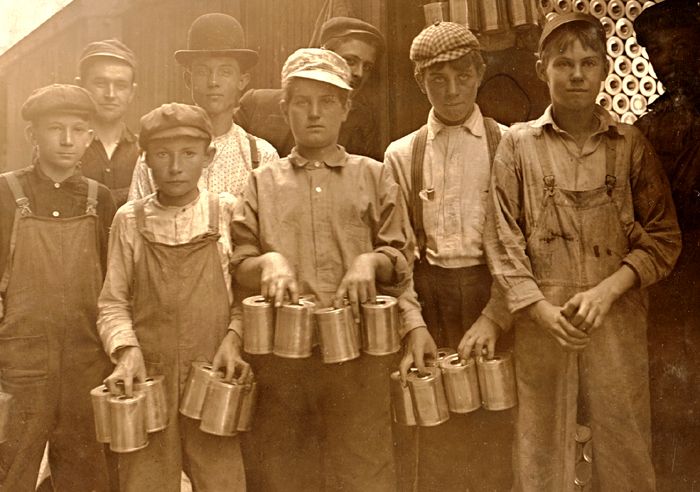
Boys working in a cannery in Indianapolis, Indiana, by Lewis Wickes Hine, 1908.
American inventors such as Alexander Graham Bell and Thomas Edison developed a long list of innovative technologies that significantly improved communication, transportation, and industrial production. Edison improved existing technologies, including the telegraph, while also creating revolutionary new technologies such as the light bulb, the phonograph, the kinetograph, and the electric dynamo. Bell, meanwhile, explored new speaking and hearing technologies and became known as the inventor of the telephone.
For millions of working Americans, the Industrial Revolution changed the very nature of their daily work. Previously, they might have worked for themselves at home, in a small shop, or outdoors, crafting raw materials into products or growing a crop from seed to table. When they took factory jobs, they were working for a large company. The repetitive work often involved only one small step in the manufacturing process, so the worker did not see or appreciate what was being made; the work was often dangerous and performed in unsanitary conditions. Some women also entered the workforce, as did many children. Child labor became a significant issue.
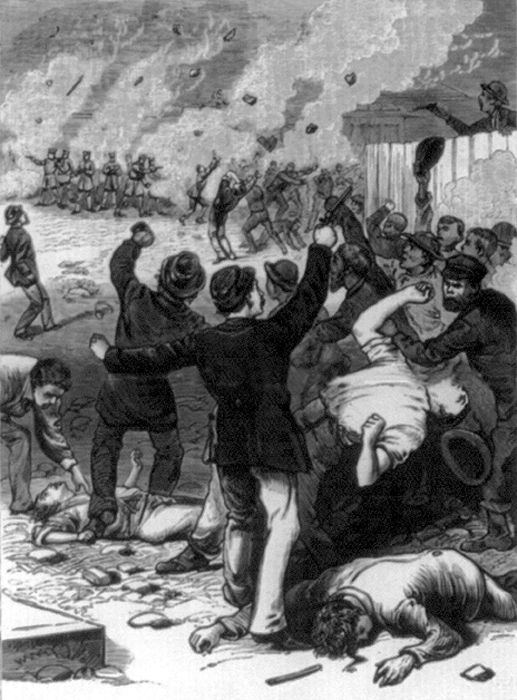
Great Railroad Strike of July 1877.
Dangerous working conditions, long hours, and concern over wages and child labor contributed to the growth of labor unions. In the decades after the Civil War, workers organized strikes and work stoppages that helped to publicize their problems.
One especially significant labor upheaval was the Great Railroad Strike of 1877. Wage cuts in the railroad industry led to a strike, which began in West Virginia and spread to three additional states over 45 days before being violently ended by a combination of vigilantes, National Guard troops, and federal forces. Similar episodes occurred more frequently in the following decades as workers organized and asserted themselves against perceived injustices.
The new jobs for the working class were in the cities. Thus, the Industrial Revolution began the transition of the United States from a rural to an urban society. Young people raised on farms saw greater opportunities in the cities and moved there, as did millions of immigrants from Europe. Providing housing for all the new residents of cities was a problem. Many workers lived in urban slums, where open sewers ran alongside the streets, and the water supply was often contaminated, leading to disease. These deplorable urban conditions gave rise to the Progressive Movement in the early 20th century, which led to the enactment of numerous new laws to protect and support people, ultimately changing the relationship between the government and its citizens.
Compiled by Kathy Alexander/Legends of America, updated July 2025.
Also See:
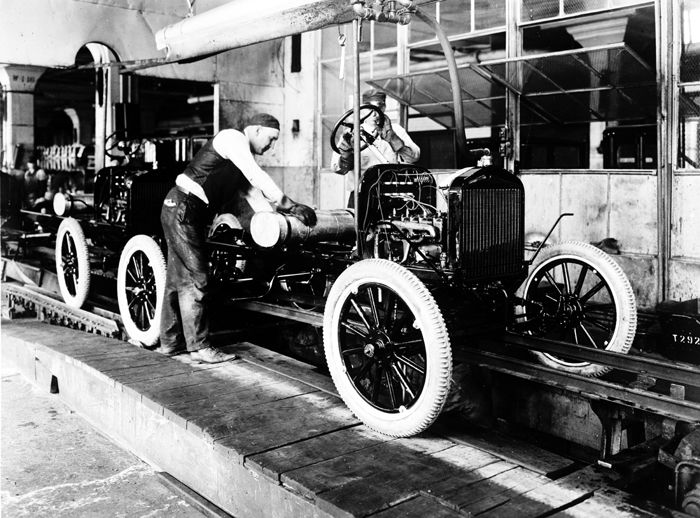
Automobile Assembly Line, by Detroit Publishing, 1923.
American History Photo Galleries
Industrial America and the Progressive Era Timeline, 1876-1929
Sources: