
The Red River War by C. D. Graves.
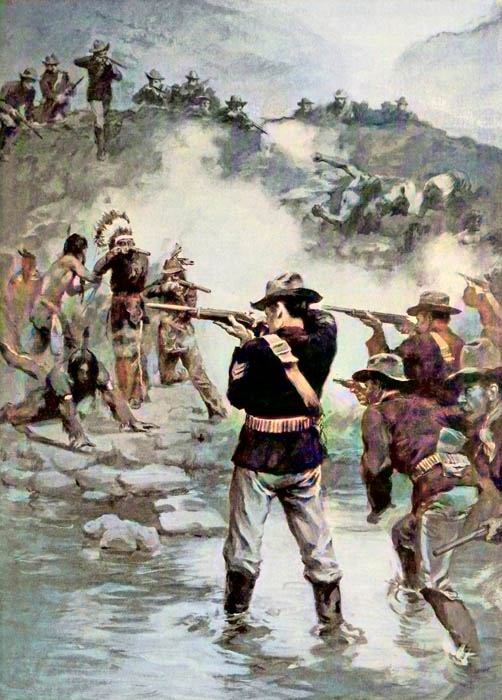
The Battle of Sappa Creek, or Massacre at Cheyenne Hole, was fought on April 23, 1875, in Rawlins County, Kansas. It was fought between the 40-member unit Company H of the Sixth United States Cavalry under the command of Second Lieutenant Austin Henely, accompanied by several buffalo hunters, against a band of Cheyenne Indians led by Little Bull that included many women and children. It was both the final and the deadliest battle in the Red River War.
Before the first homesteaders arrived in Rawlins County in 1875, the open prairie was visited only by wild animals, Native Americans, buffalo hunters, and some longhorn cattle driven along the Texas Trail to Ogallala, Nebraska.
The vast expanse of High Plains that today encompasses Rawlins County, Kansas, was once home and hunting ground to Cheyenne, Comanche, Kiowa, and Arapaho Indians. With continued railroad construction and the growth of permanent settlements, American westward expansion during the 1860s and 1870s threatened the tribes‘ traditional hunting grounds, resulting in increased tension and armed conflict.
On April 23, 1875, the final violent act in the so-called Red River War occurred on Sappa Creek. Waged mainly in Texas, the war ended with the Comanche’s surrender. But a group of about 75 Northern Cheyenne who had fought alongside the Comanche escaped to the north, through western Kansas, on their way back to the Black Hills.
While camped on the banks of Sappa Creek, 40 men of the Sixth U.S. Cavalry from Fort Wallace attacked them, and a fierce battle ensued. Two soldiers were killed, along with Indian casualties of 19 warriors, eight women, and eight children. Only one indian escaped.
The battle was the result of escalating tensions between Indians, U.S. settlers, and the U.S. government over the issue of land rights and buffalo hunting. This battle has garnered controversy from authors, local settlers, and participants in the fight over allegations of atrocities committed by Henely and his troops, including ignoring an attempt to parley and burning of living Indians.
In the aftermath, settlers on Sappa and Beaver Creeks in Rawlins and adjoining Decatur County were affected by the Cheyenne’s famous trek north in the fall of 1878. At that time, 300 Cheyenne, led by Chiefs Dull Knife and Little Wolf, fled Indian Territory (Oklahoma) for their homeland to the north.
On October 1, 1878, they crossed Beaver Creek, and 40 settlers were killed in what was called the Cheyenne Raid. After the raid, they killed many cattle in the canyon to the south, which is now known as Hundred Head Draw. As they fled north, the Cheyenne left behind a wounded indian boy, who was later killed by white settlers.
©Kathy Alexander/Legends of America, August 2025.
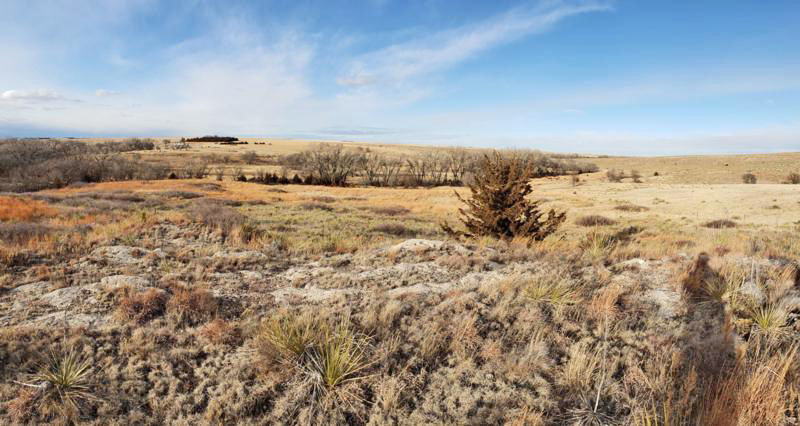
Sappa Creek Massacre Site in Rawlins County, Kansas. Courtesy of Kansas Historic Resources Inventory.
Also See: