
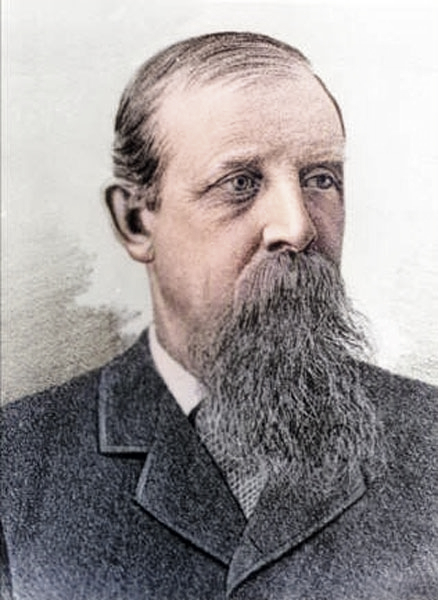
Theodore Case.
Theodore Case was a Kansas City, Missouri, physician, scientist, soldier, businessman, and one of Kansas City’s founders.
Theadore Spencer Case, the oldest of four sons, was born in Jackson, Georgia, on January 26, 1832, to Ermine Case and Mary A. Cowles Case, both natives of Connecticut. They remained in Georgia briefly after his birth before moving to Columbus, Ohio, where they lived as well-known and honored residents for many years.
Theodore received an excellent public school education in Columbus and found solace in his studies after his mother’s death when he was 15. He completed his undergraduate studies at Marietta College in Ohio and earned a Master of Arts degree from the school in 1851. After graduating from Marietta, he taught mathematics for a time at the Esther Institute in Columbus. During this time, he was also engaged in the study of medicine with the well-known and lamented Professor S.M. Smith, M.D., of the Starling Medical College. He graduated from this college as a Doctor of Medicine in 1853.
He gained his first professional experience as a physician at the Ohio State Penitentiary. A few years later, during the spring of 1857, Case moved west to the Town of Kansas, a muddy village of some 2,000 people that was taking shape on the banks of the Missouri and Kansas Rivers.
In 1858, Case married Julia Lykins, the daughter of early Kansas City mayor Dr. Johnston Lykins.
Case’s civic leadership began in the days before the Civil War, when he was elected alderman in the 1860 election. That year, as a staunch Republican, he was one of the few Missouri votes for Abraham Lincoln. He held the office of alderman until 1861 and edited the Medical Review in Kansas City.
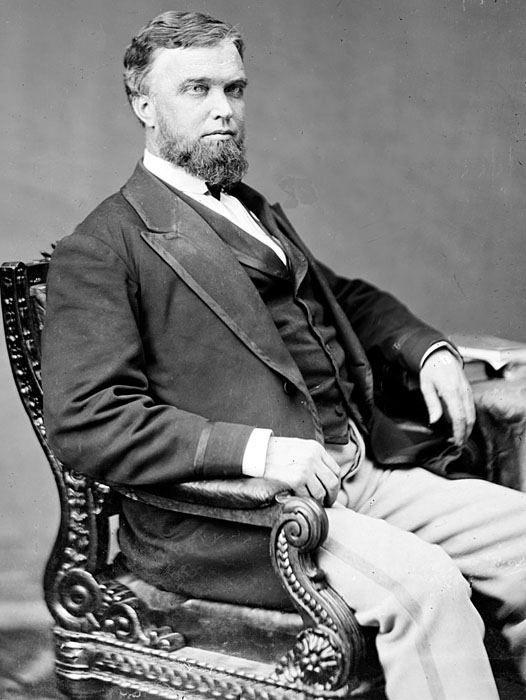
Robert T. Van Horn
Case enlisted soon after the Civil War began in 1861. He joined Colonel Robert T. Van Horn’s 13th Missouri Volunteers as a private. A few weeks later, he was promoted to second lieutenant of his company and was detached and assigned to duty as acting quartermaster and commissary of subsistence.
During the war, he wrote and published the Quartermaster’s Guide, a manual that the United States quartermaster general praised.
In June 1862, President Abraham Lincoln promoted and commissioned him captain and assistant quartermaster of the U.S. Volunteers.
Brigadier-General Thomas Ewing, Jr., appointed him chief quartermaster of the military district of The Border in 1863, and Brigadier-General E.B. Brown appointed him to the same position in the district of Central Missouri in 1864.
During the war, he received commendations from various commanders under whom he served, including Brigadier-Generals Ewing, Brown, and Fisk and Major-Generals Pleasanton, Blunt, and Rosecrans.
In February 1865, he was made colonel and quartermaster-general of Missouri. As quartermaster, he provided troops with clothing, equipment, and food. He excelled in this capacity and was appointed to the position of assistant quartermaster of the entire region. At the conclusion of the war, he reached the rank of colonel before he concluded his duties in 1866.
When he retired to private life at his home in Kansas City, he became a most active, zealous, and efficient worker in building up and advancing the town, giving much of his time and money to the work. Side by side and hand in hand, he stood with Robert Van Horn, Kersey Coates, Milton Payne, Johnston Lykins, James Reed, John McCoy, and the other founders and creators of the city.
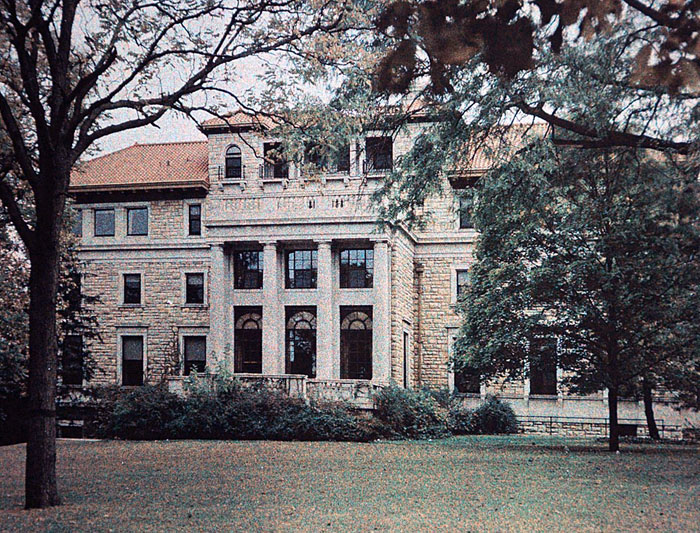
University of Missouri in Kansas City.
Governor Fletcher appointed him railroad commissioner in March 1866. The same year, he was curator of the University of Missouri, a position he held until 1868.
In 1867, he was appointed to the Board of Curators of Missouri State University and held the position for two years.
Between the years of 1867 and 1872, he erected about 25 valuable buildings in the city.
In 1869, he and his brother, Oliver Case, purchased and opened a considerable establishment and engaged in manufacturing plows and other agricultural implements for some years.
In 1870, he assisted in organizing the Commercial Bank and was made its president.
His wife Julia died in 1872, leaving three children — Lilah M., Johnston L., and Ermine C.; three others died in early life.
In March 1873, President Ulysses S. Grant appointed him postmaster of Kansas City. Presidents Hayes and Arthur reappointed him, so he held the office continuously for nearly 13 years.
In 1874, two years after Julia’s death, he married Fidelia O. Wright.
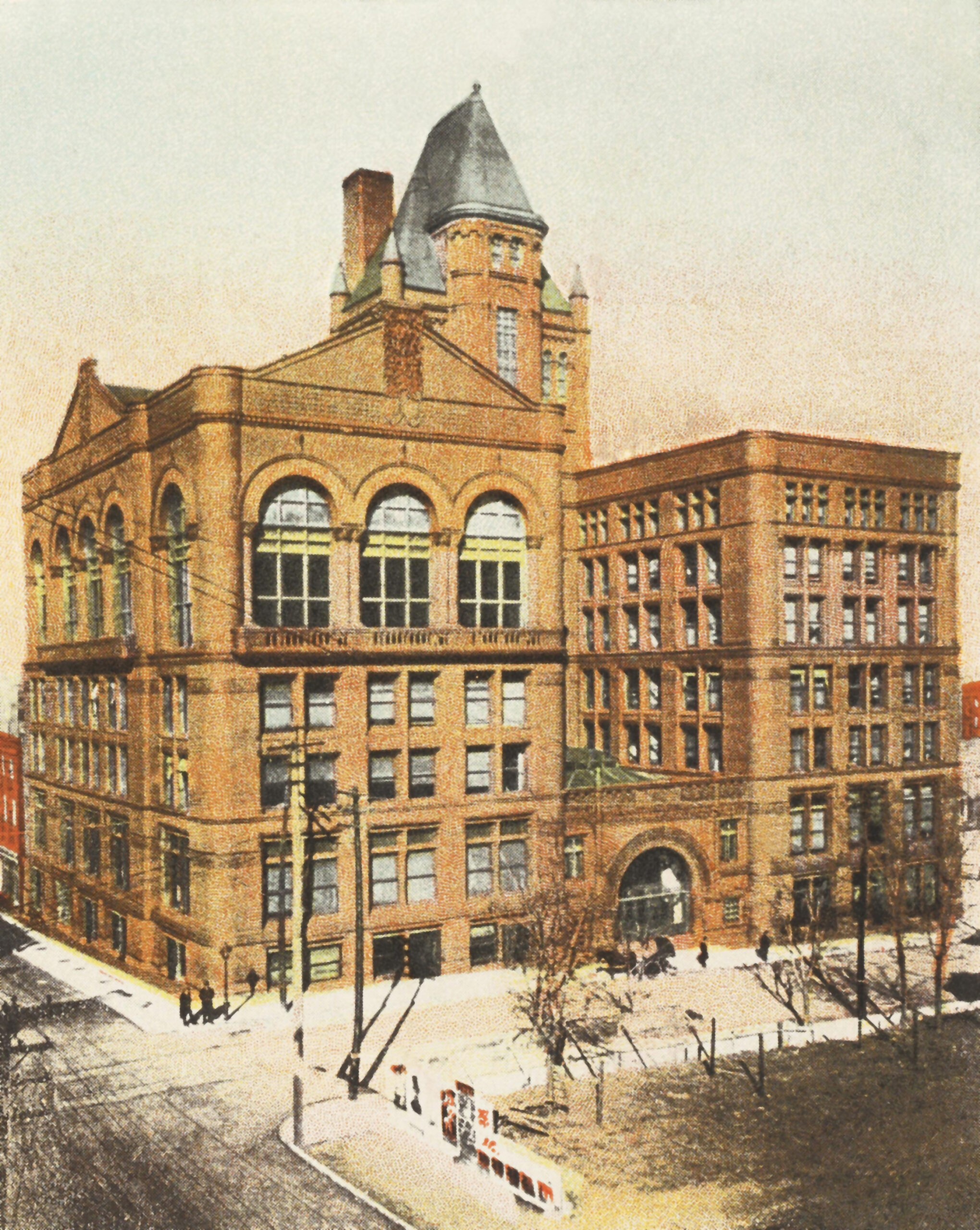
Kansas City, Missouri Board of Trade.
He edited the Kansas City Review of Science and Industry from 1877 to 1885.
In March 1883, he received a Ph.D. degree from the University of Kansas City.
In 1885, he became a professor of chemistry at Kansas City Medical College. That year, Governor Crittenden appointed him a commissioner from the State of Missouri to the World’s Exposition at New Orleans, Louisiana.
In 1886, he became the first president of the Kansas City Real Estate and Stock Exchange. That year, he organized the Merchants and Manufacturers Bureau and, as its secretary, performed valuable service. He was also an early member of the Board of Trade and was among the founders of the Provident Association, the Art Association, and the Young Men’s Christian Association.
In 1891, he was chosen to fill a vacancy as city treasurer and was elected to succeed himself the following year.
He served as a justice of the peace from 1894 to 1898. During the remainder of his active days, he devoted his attention to real estate matters and literary work. He was a member of the Grand Army of the Republic and commander of one of the first posts in the State, a member of the Military Order of the Loyal Legion and vice commander of the Missouri Commandery, and a member of the Baptist Church.
Colonel Case died on February 16, 1900, at age 78, after serving the community with varied accomplishments and being a master of many pursuits. His wife and three children survived him. He was buried at Elmwood Cemetery in Kansas City.
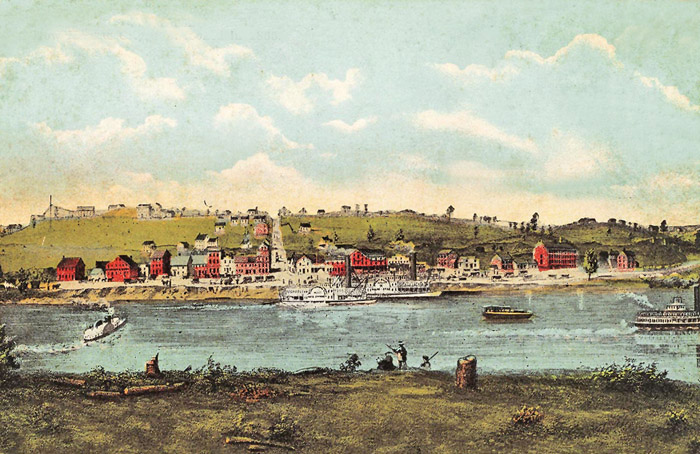
Early Day, Kansas City, Missouri.
©Kathy Alexander/Legends of America, updated August 2025.
Also See:
Historic People of Kansas City, Missouri
Town of Kansas – Before Kansas City
Sources:
Appleton’s Cyclopedia of American Biography, volume 1, New York City, 1900.
Case, Theodore S.; History of Kansas City, Missouri, D. Mason & Co., Syracuse, New York, 1888.
Missouri Valley Special Collections
Wikitree