
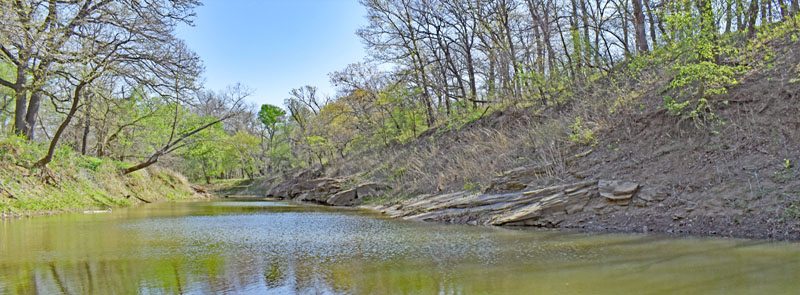
Caney River near Elgin, Kansas, in Chautauqua County by Kathy Alexander.
The Caney River is a 180-mile-long river that runs through southern Kansas and northeastern Oklahoma. The river is a tributary of the Verdigris River, and is usually a flatwater stream.
The Caney forms just north of the town of Grenola in Elk County, Kansas, then moves south into Oklahoma near Elgin, Kansas. It then flows south through Osage County, where it is dammed near Bowring to form Hulah Lake.
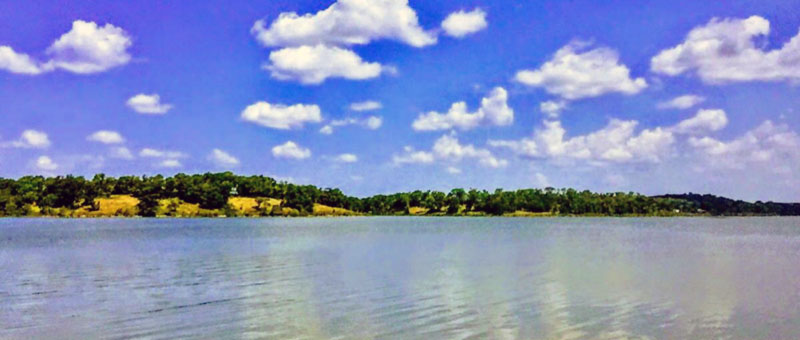
Hula Lake, Oklahoma, courtesy Green County Tourism.
Downstream of the Hulah dam, the river flows into Washington County through the center of Bartlesville, where it separates the city’s downtown from its residential east side. The Little Caney River is also dammed in Washington County, Oklahoma, to form Copan Lake.
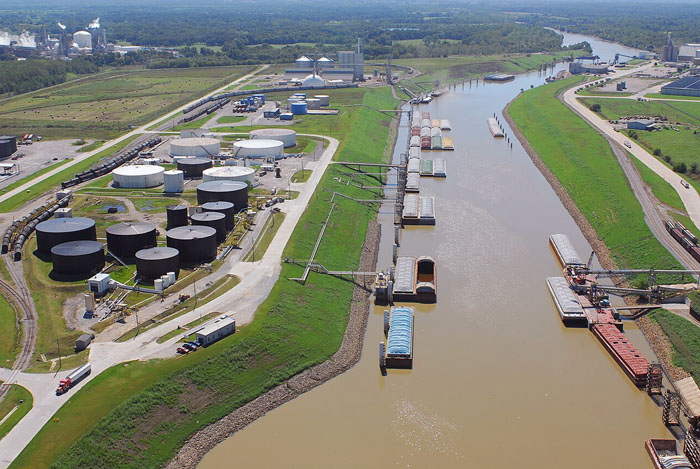
Port of Catoosa near Tulsa, Oklahoma, courtesy Wikipedia.
Just south of Bartlesville, the river turns southeast and flows into Rogers County, where it joins the Verdigris River between Collinsville and Claremore north of the Port of Catoosa. This larger river, which carries the water of both Caney and Verdigris, then flows towards Muskogee, Oklahoma, where it joins the mighty Arkansas River.
The river caused disastrous floods in the Bartlesville, Oklahoma area in 1885, 1926, and 1986.
The United States Army Corps of Engineers operates the dam at Hulah Lake. In October 1986, the Corps was forced to open floodgates at the dam due to above-average rainfall in the Great Plains. The resulting 500-year flood split Bartlesville in half for several days and caused more than $30 million in property damage.
The river offers excellent fishing and waterfowl hunting, as well as opportunities for canoeing or kayaking.
The Caney watershed, located in southern Kansas and northern Oklahoma, covers approximately 2,221 square miles.
Surface water in the Caney watershed is primarily used for agricultural and industrial purposes, with several large reservoirs providing water storage and recreation opportunities. These reservoirs can also have a significant impact on the watershed’s hydrology.
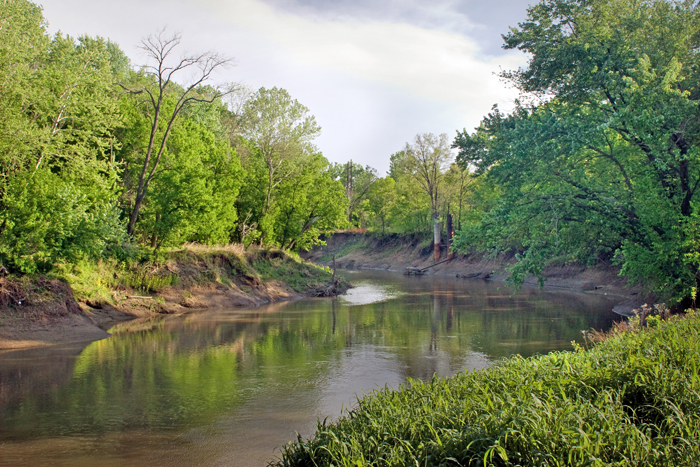
Caney River in Bartlesville, Oklahoma, courtesy of Wikipedia.
Compiled by Kathy Alexander/Legends of America, updated April 2025.
Also See:
Sources:
Facebook – Kayaking the Rivers of Oklahoma Project
Snoflo
Wikipedia