
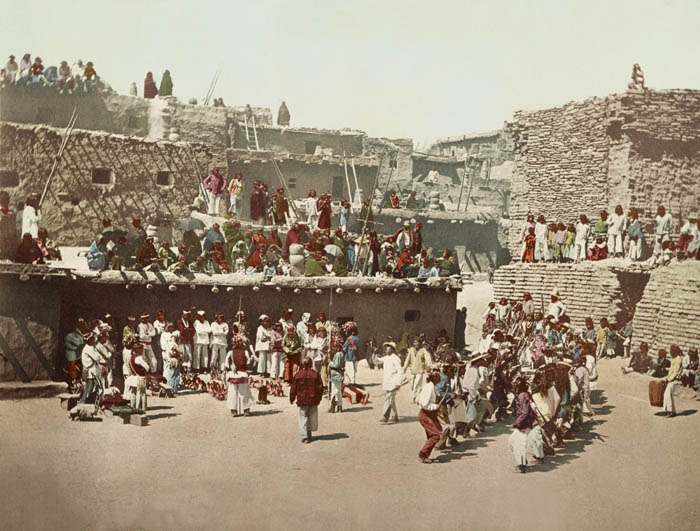
Rain Dance at the Zuni Pueblo in New Mexico. Image by the Detroit Publishing Co., 1899.
The ceremonial rain dance is performed by Native Americans who believe it will cause rain and protect their harvest.
The dance is performed by numerous agricultural peoples, especially in the American Southwest, where summers often brought prolonged periods of drought. The ceremony was performed to ask the spirits or gods to send rain for the tribes‘ crops. The dance typically takes place during spring planting and before crops are harvested. However, it is also performed in times when rain is desperately needed.
Long before European settlers arrived, Native Americans often tracked and followed known weather patterns.
Though tribes most often performed the rain dance in the Southwest, such as the Puebloan, Hopi, Zuni, and Apache, other tribes, including the Cherokee in the Southeastern United States, also performed the ceremony. Many tribes continue to perform this ceremony to this day. After European settlement in the United States, Native Americans would offer to perform a rain dance for settlers in return for trade items. This is best known to have happened among the Osage and Quapaw Indian tribes of Missouri and Arkansas.
The Native American rain dance was performed by both the men and women of the tribe, unlike other tribal rituals where only men were allowed.
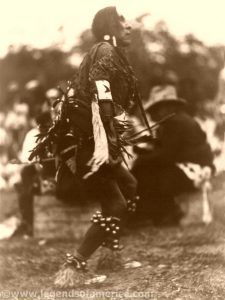
Chief Turtle, Rain Dance in Montana., Bain News Service, 1920.
The dance varies from tribe to tribe, each having its unique rituals and costumes. Feathers and turquoise are worn during the dance, symbolizing the elements of wind and rain. Some tribes wear large headdresses, while the Hopi use Kachina masks, representing animals associated with rain. The men also have their bodies painted according to tribal standards and wear special beads, while the women wear black dresses that cover their bodies, leaving only their bare feet visible.
Accessories often include paint on the body, beads, animal skins, horse and goat hair, feathers, embroidered aprons, and jewelry made of leather, silver, and turquoise. Feathers and the color blue are often found in costumes and accessories, symbolizing the wind and rain. These special clothes and accessories worn during the rain dance were typically reserved for this ceremony and were not worn at other times of the year.
The rain dance starts with the men and women forming separate lines. The intricate dance steps typically involve moving in a zigzag pattern, unlike other ceremonial dances that involve standing in a circle. The dance is accompanied by singing.
Stories of the origins of ceremonial dances have been passed from generation to generation orally.
Many Native Americans still perform the ritual today, and it can be seen on several reservations in the United States.
©Kathy Alexander/Legends of America, July 2025.
Also See:
Native American Photo Galleries
Native American Rituals and Ceremonies
Sources:
Indians.org
Native.net
Study.com
Wikipedia