
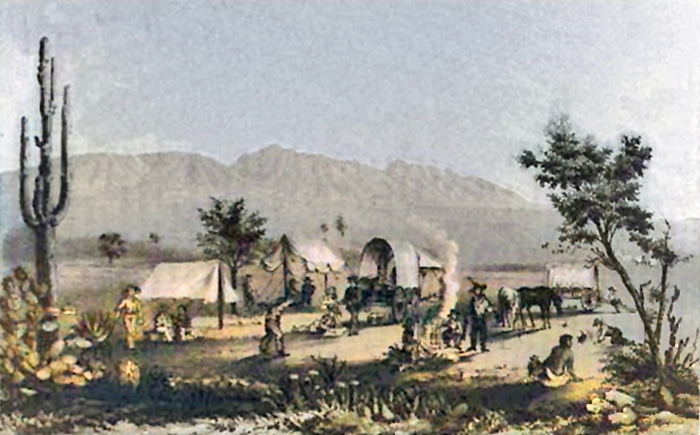
Maricopa Wells, Arizona, 1857.
The Battle of Pima Butte, also known as the Battle of Maricopa Wells, took place on September 1, 1857, at Pima Butte, near Maricopa Wells, Arizona, in the Estrella Mountains. This battle is considered one of the most significant events in Arizona’s history. It was marked by intense hand-to-hand combat when warriors from the Yuma, Mojave, Apache, and Yavapai tribes attacked a Maricopa village named Secate. The Maricopa people and their Pima allies mounted a fierce defense against the assault. This battle was notable as it was the last major conflict involving the Yuma people and the last significant battle fought exclusively between Native Americans in North America.
The Yuma and the Maricopa had been enemies for hundreds of years. On many occasions, the two tribes would gather their warriors together at the peak of Berdache Mountain. The two sides would shout insults at each other before fighting a battle.
In August 1857, Yuma Chief Francisco, who had recently been made a chief, was eager to prove himself. He soon assembled a battalion of about 300 Yuma, Apache, Yavapai, and Mojave warriors to attack the Maricopa tribe. The combined army walked nearly 160 miles over eight days, arriving near Secate on August 31, 1857.
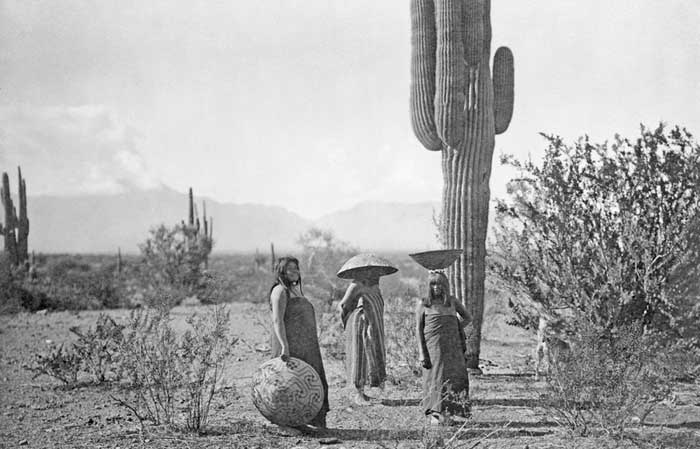
Maricopa Women gathering Saguaro fruit in Arizona. Photo by Edward Curtis, 1907.
Though tired and hungry, they began their attack the next day. The invaders’ first act of war was to kill a group of Maricopa women who were away from their village gathering mesquite beans. The Yuma spared one of the mesquite bean gatherers to use her as a guide. Her brother was a well-known warrior, and she was forced to lead them to his dwelling, at which time she was killed. Her brother fled, but he was quick, and they were still weary.
Francisco then attacked the Maricopa village and began burning the structures. The women and children fled for protection to Pima Butte, just south of the village. In the meantime, the Maricopa warriors gathered and sent a distress call to the nearby Pima villages.
Afterward, the Apache, Yavapai, and most of the Mohave left the village. However, Chief Francisco and his men remained in the burning village, resting and eating. It was a fatal mistake.
Before long, Maricopa and Pima forces, some mounted on horses, launched a counterattack, surrounding the attackers. The remaining Yuma and Mohave were outnumbered. Most of the Yuma and Mohave were killed, including Chief Francisco.
Their bodies — an estimated 160 — were where they had fallen.
The San Diego Herald mistakenly reported on September 12 that the battle was a three-sided engagement between the Pima, Yuma, and the Maricopa, all against each other. At the same time, the Daily Alta California reported that the battle was:
…seldom equaled in Indian warfare. It is reported that 150 to 160 allied Indians, being nearly quite the entire party, were left dead in the field.
In a later article, the San Diego Herald stated:
…from all accounts, it would appear that this battle, in which the Maricopa and their allies, the Pima, so bravely defended their homes, destroying nearly the whole force that came into battle against them, is the largest Indian fight in this region for years.
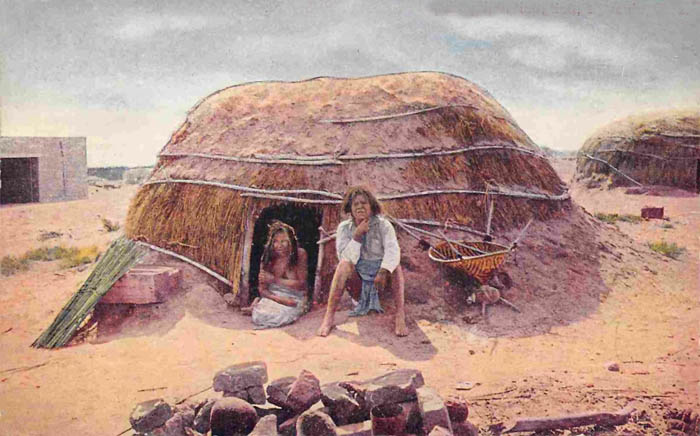
Maricopa Dwelling.
The Maricopa courageously defended their homes and destroyed almost all the opposing forces. The Yavapai consider this to be the most devastating massacre in their history, with newspapers and army reports of the time describing it as one of the most “terrible” battles in Apache history.