
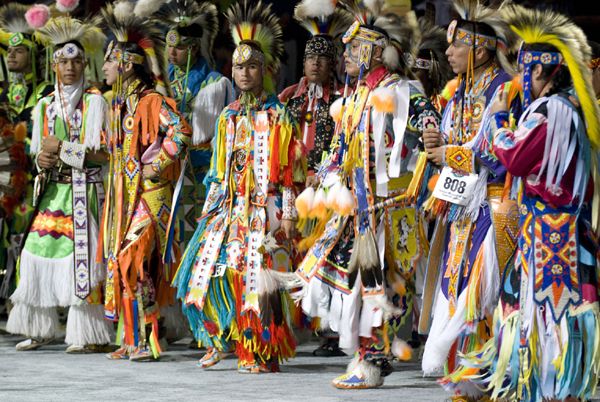
Grass Dance, courtesy of Wikipedia.
The grass dance, also known as the Omaha dance, is one of the oldest and most widely used dances in Native American culture. This style of modern Native American men’s powwow dancing originated in the warrior societies of the Northern Plains Indians, particularly the Omaha, Ponca, Pawnee, Chippewa, Winnebago, and the Dakota Sioux.
The dance is a beautiful, flowing style that reflects warrior movements, such as stalking the game and fighting an enemy. Powwows are American Indian events that feature Native American dance and song, celebrating heritage and traditions, to connect and keep their culture alive through dance, song, and storytelling.
The Grass Dance style is easily recognizable by its striking outfits, with long, thick, bright, multi-colored fringes made of yarn, ribbon, or broadcloth. The movement of fringe and ribbon enhances their graceful movement as they sway in an imagined breeze, keeping rhythm with the drums.
The grass dancers’ role was to flatten the grass in the arena before essential celebrations. The dancers blessed the ground while they danced to the beat of the drum. While the grass dancers danced, they flattened the grass with their feet in preparation for the ceremonies to take place. The name “grass” does not come from stomping down the terrain, but rather from the old habit of tying sweetgrass braids to the dancer’s belts, which produced a swaying effect.
An old legend tells that the dance was created by a boy whose legs were crippled. Longing to run, dance, and play with the other children, a Medicine Man was consulted, who advised the boy to fast and seek a vision on the prairie. Following the instructions, the young man left the village and went out alone on the plains to a patch of sweet grass where he fasted and prayed. Watching the long swaying prairie grass mesmerized him, and he soon saw himself dancing in a manner similar to the movement of the prairie grass. When he returned to the village, he shared his vision and was said to have later been able to use his legs to perform the first grass dance.
Another story recounts the origin of the dance, which is said to have stemmed from the movements of the early scouts as they sought a suitable campsite. With the grass being high in areas, the scouts would dance in a special way to flatten it and make the area acceptable for a new camp or meeting site.
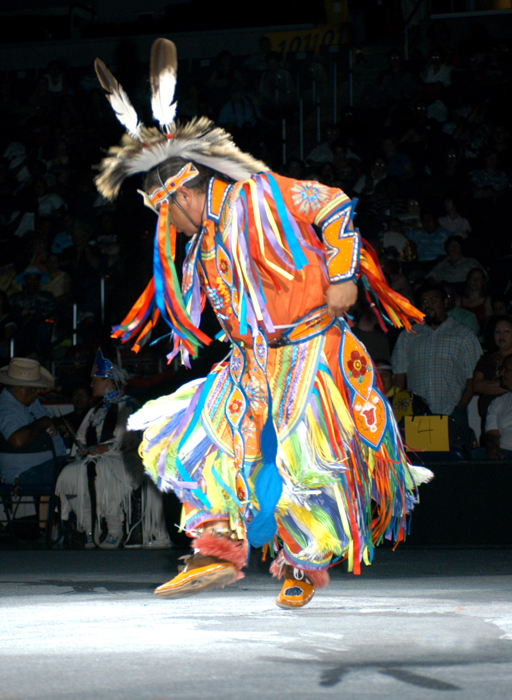
Grass dancer, courtesy of Wikipedia.
A popular and competitive dance today in which both men and women participate in the intertribal ceremony. As the dancers move in fluid and bending positions to the music, their movements replicate the gentle sway of grass in the breeze. In addition to its practical purpose, another objective of the dance is to honor and respect the ancestors and to gain spiritual strength from the earth. Special blessings are not only bestowed upon the dancers but also upon the observers.
©Kathy Alexander/Legends of America, updated August 2025.
Also See:
Native American Photo Galleries
Native American Rituals and Ceremonies
Sources: