
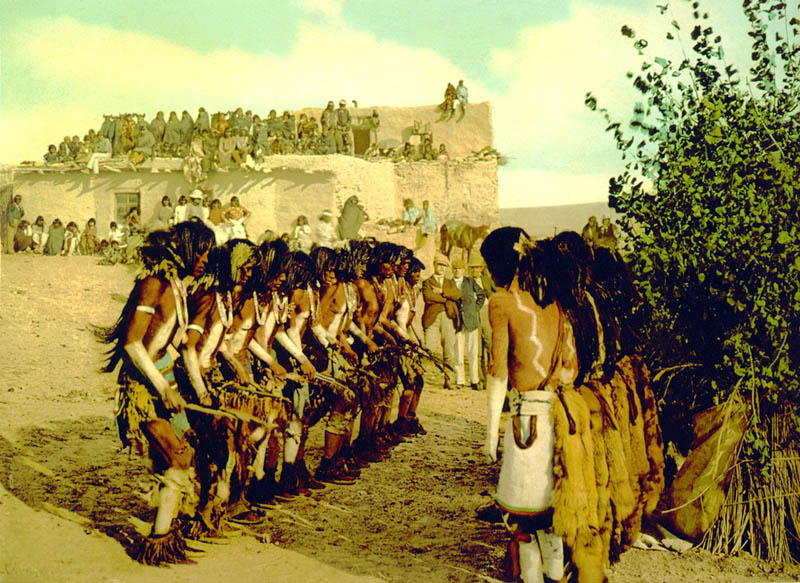
Hopi Antelope priests chanting at Kisi Moki snake dance, Image by Detroit Photographic Co., 1902.
The most widely publicized of Hopi rituals was the Snake Dance, held annually in late August, during which the performers dance with live snakes in their mouths. The dance is believed to have originated as a water ceremony, as snakes were traditionally regarded as the guardians of springs. Today, it is primarily a rain ceremony to honor Hopi ancestors. The tribe regards snakes as their “brothers” and relies on them to carry their prayers for rain to the gods and spirits of their ancestors.
The Snake Dance requires two weeks of ritual preparation, during which children gather and watch the snakes until the time for the dance. On the last day of the 16-day celebration, the dance is performed. By percentage of the local snake population, most are rattlesnakes, but all are handled freely.
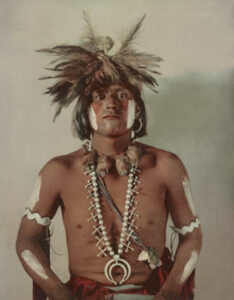
Hopi snake priest, 1902.
Before the dance begins, the participants take an emetic (likely a sedative herb) that is not an antivenom, and then dance with snakes in their mouths. There is usually an Antelope Priest in attendance who helps with the dance, sometimes stroking the snakes with a feather or supporting their weight. The dance includes swaying, rattles, a guttural chant, and circling of the plaza with snakes. After the dance, the snakes are released in the four directions to carry the prayers of the dancers. Although part of the Snake Dance is performed for the tribe, this is only a portion of a lengthy ceremony, most of which is conducted privately in kivas.
Though the dance was once open to the public, it is now open to only tribal members due to illegal photography and a lack of respect for the traditions and ceremonial practices of the Hopi.