

American Exploration.
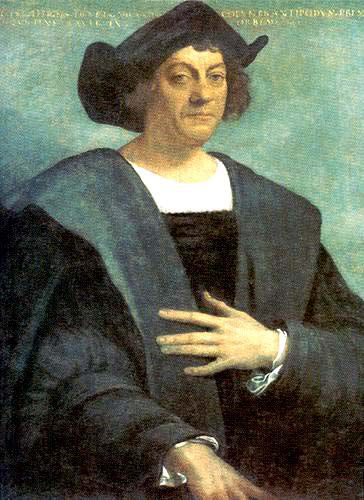
Christopher Columbus.

Lewis and Clark with Sacagawea, guiding them.
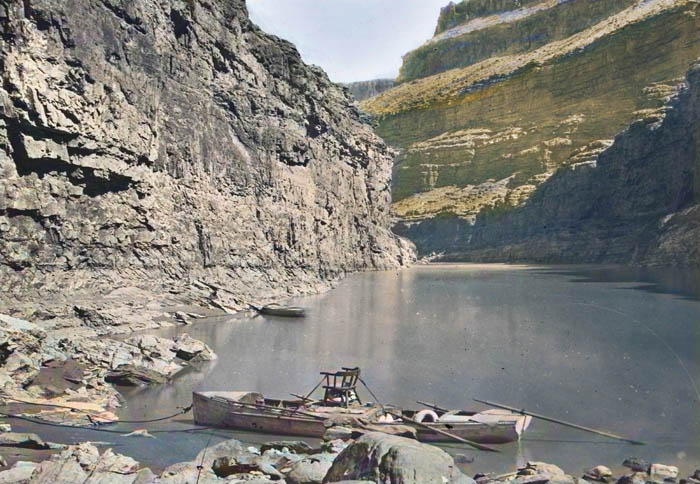
Powell Expedition boat in the Grand Canyon, 1871.
Christopher Columbus – Discovering the Americas?
Coronado’s Expedition of the Southwest
Corps of Discovery – The Lewis & Clark Expedition
Discovery and Exploration of the Sunshine State
Early Expeditions Through Kansas
Fremont’s Expeditions of the American West
Glenn–Fowler Expedition to Santa Fe
Stephen Long’s Expedition of the Great Plains
Marmaduke’s Missouri Expeditions in the Civil War
John Wesley Powell – Exploring the Grand Canyon
The exploration of North America by European sailors and geographers was an effort by major European powers to map and explore the continent with the goal of economic, religious, and military expansion.

Asians crossing the Bering Strait.
However, the first peoples to explore and settle the Americas were not Europeans but the ancestors of the groups known today as the Indigenous peoples of the Americas, also called the First Nations, Native Americans, or American Indians. These early explorers were members of nomadic hunter-gatherer cultural groups that moved from Asia to North America during the last ice age when thick ice sheets covered much of northern North America. As the ice sheets absorbed water, the sea levels dropped, and a land bridge emerged along what is now the Bering Strait. From about 30,000 to 12,000 years ago, this land bridge connected northeastern Asia to what is now Alaska. Some people came to North America by following the Pacific coast southward. They may have combined walking with boat travel. Others walked across a glacier-free area through the center of what is now Canada.
More exploration began with the Vikings’ brief stint in Newfoundland in about 1000 A.D. In 1492, the Italian explorer Christopher Columbus landed in the Caribbean Islands—a momentous event in world history. Although Europeans would not realize it for several years, he had accidentally “discovered” the Americas in the Western Hemisphere. Europeans called these continents the “New World” because they were wholly unknown.
This exploration’s combative and rapid nature resulted from a series of countering actions by neighboring European nations to ensure no single country had garnered enough wealth and power from the Americas to militarily tip the scales over on the European continent. It spanned the late 15th to early 17th centuries and consisted primarily of expeditions funded by Spain, England, France, and Portugal.
Exploration continued through England’s colonization of the Atlantic coast in the 17th century, which laid the foundation for the United States of America. The centuries following the European arrivals would see the culmination of this effort as Americans pushed westward across the continent, enticed by the lure of riches, open land, and a desire to fulfill the nation’s manifest destiny.
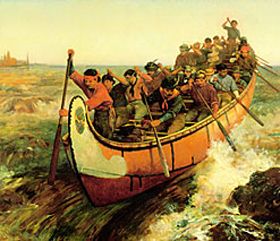
French Explorers