

J. Edgar Hoover
“We want no Gestapo or secret police. The FBI is tending in that direction. They are dabbling in sex-life scandals and plain blackmail. J. Edgar Hoover would give his right eye to take over, and all congressmen and senators are afraid of him.”
— U.S. President Harry S Truman
FBI Seal
John Edgar Hoover, the first and longest Director of the Federal Bureau of Investigation, was a very powerful man who was not only lauded for building the FBI into a large and efficient crime-fighting agency, but he was also an extremely controversial figure due to his secret abuses of power, and rumors of homosexuality and cross-dressing.
Credited with founding the FBI, instituting modernizations such as a centralized fingerprint file, forensic laboratories, and a national blacklist, he also used the FBI to harass political dissenters and activists, amass secret files on political leaders and Hollywood stars, and collect evidence using illegal methods. During these years, he also denied the existence of organized crime and intimidated and threatened others, including multiple sitting presidents of the United States. He held photos and information that could be used for blackmail purposes. Amidst all this, rumors began to fly as early as the 1930s about his sexual proclivities. In today’s more liberated world, these would be overlooked, but they could have destroyed his career and livelihood at that time.
Hoover was born on January 1, 1895, to Dickerson Naylor Hoover and Anna Marie Scheitlin Hoover in Washington, D.C. He grew up attending Central High School and was employed as an entry-level messenger at the Library of Congress at 18. He took night school classes at George Washington University Law School, where he obtained a Bachelor of Laws degree in 1916. In 1917, when the United States entered World War I, Hoover passed the bar and obtained a draft-exempt position as a clerk with the Department of Justice. Two years later, he was appointed as a special assistant to Attorney General A. Mitchell Palmer and began assembling information about tens of thousands of political “radicals,” using military and government intelligence, police investigations, private detectives, informants, and other tools that he would continue to use throughout his long career.

Palmer Raids Newspaper.
On January 2, 1920, Hoover’s division of the Bureau of Investigation carried out simultaneous raids in several major cities, arresting thousands of suspected Communists, anarchists, and other radicals. Called the Palmer Raids, these activities were initially hailed as a success but were soon criticized by many for violating the civil liberties of thousands of Americans. Palmer eventually resigned in disgrace, but Hoover, though he had a heavy role in planning and executing the raids, continued successfully. In 1921, Hoover was named assistant director of the Bureau of Investigation, and in May 1924, 29-year-old Hoover was named acting director.
In the summer of 1924, the FBI created an Identification Division to handle its growing fingerprint files and gather prints from law enforcement agencies nationwide. The FBI then made them available to search them upon request for matches to criminals and crime evidence. This was the precursor to today’s Criminal Justice Information Services Division. He pioneered the Bureau’s technical laboratory to perform sophisticated forensic analysis.
During this time, Prohibition was in full force, and organized crime thrived in the United States, with gangsters competing against each other for the profitable market in bootleg liquor. During the Great Depression, Hollywood and much of the American public romanticized gangsters and notorious outlaws like John Dillinger, Bonnie Parker and Clyde Barrow, “Baby Face” Nelson, and George “Machine Gun” Kelly as heroes for their defiance of authority.
Despite numerous gangland shootings as Mafia groups struggled for control of illegal alcohol sales and other criminal activities, Hoover persistently denied the existence of organized crime. Many believed that his denial and failure to use the full force of the FBI to investigate it was due to Mafia gangsters Meyer Lansky and Frank Costello, who were said to have embarrassing photographs of Hoover in the company of his protege, FBI Deputy Director Clyde Tolson. Others thought that Costello corrupted Hoover by providing the hardcore horseplayer with horseracing tips. Hoover was known to send Special Agents to place $100 bets for him, and he once said the Bureau had “much more important functions” than arresting bookmakers and gamblers.

John Edgar Hoover, 1924.
As the public face of the war on crime in the 1930s, Hoover became the ultimate G-Man in the public imagination. President Franklin D. Roosevelt gave the FBI a sweeping mandate to investigate fascism and communism in the United States, which Hoover used to increase domestic surveillance, including wiretapping. He also set out to reform the scandal-tarnished Bureau of Investigation into a more effective, professional investigative force. He fired sub-par investigators and instituted a rigorous hiring process and a strict code of conduct for all agents.
Although Hoover built the reputation of the FBI arresting bank robbers in the 1930s, his main interest had always been Communist subversion.
During World War II, Hoover’s Bureau took on much responsibility for investigating espionage at home and abroad, as the Central Intelligence Agency (CIA) did not exist then.
As early as 1945, President Harry S. Truman complained about how Hoover and his agents were “dabbling in sex life scandals and plain blackmail when they should be catching criminals.”
During the Cold War, beginning in 1947, he was able to focus the FBI’s attention on communism investigations. The agency then went to work rooting out Soviet spies, dismantling their espionage networks, and aggressively prosecuting accused spies like Alger Hiss and Julius and Ethel Rosenberg. On the now-discredited theory that communism was linked to homosexuality, the FBI compiled vast files of suspected or known homosexuals within the U.S. government.
Through the mid-50s, Hoover paid little attention to criminal vice rackets such as illegal drugs, prostitution, and extortion. He flatly denied the existence of the Mafia in the United States. In the 1950s, evidence of the FBI’s unwillingness to investigate the Mafia became a topic of public criticism.
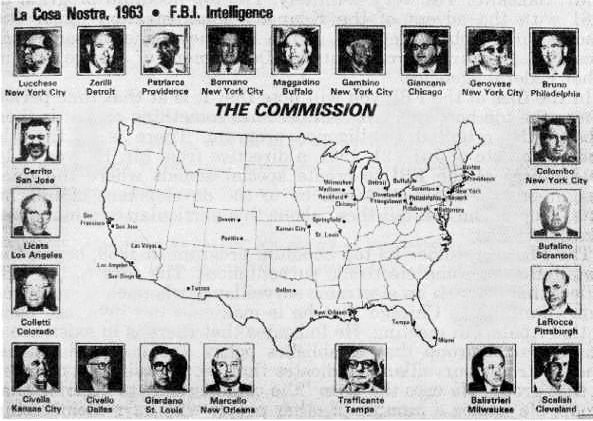
Mafia bosses across the country in 1963
As America’s top cop, he blackmailed presidents, dug up dirt on political enemies and allies alike, turned a blind eye to organized crime, and pursued personal vendettas using federal agents.
However, after the November 1957 meeting of crime bosses in Apalachin, New York, Hoover could no longer deny the existence of a nationwide crime syndicate. At that time, La Cosa Nostra’s control of the Syndicate’s many branches operating criminal activities throughout North America was heavily reported in popular newspapers and magazines. Hoover then created the “Top Hoodlum Program” and went after the syndicate’s top bosses nationwide.
In 1959, Hoover had 489 agents spying on communists but only four investigating the Mafia.
In the 1960s, Hoover’s FBI investigated leaders of the civil rights movement, which he believed was intimately connected to communism.
He also kept tabs on a growing list of people he considered “subversives,” which would eventually include such famous figures as:
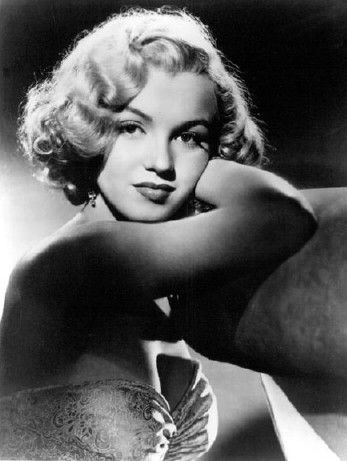
Marilyn Monroe
Muhammad Ali
Lucille Ball
Charlie Chaplin
Walt Disney
Albert Einstein
The Grateful Dead
Helen Keller
Marilyn Monroe
Jackie Robinson
Eleanor Roosevelt
Colonel Sanders

J. Edgar Hoover and President John F. Kennedy.
Hoover abused his position as head of the FBI to keep files on stars, directors, producers, and reporters. The files, often through little more than innuendo, were extensive collections of personal information and activities such as potential homosexual activity, drug use, alcohol use, sexual indiscretions, extramarital affairs, and political beliefs that were held for the purpose of blackmail. When Hoover found it beneficial to his own interests, he leaked information to press representatives sympathetic to his views, especially newspaper columnist Hedda Hopper. One of the greatest scandals in Hollywood was the routine abuse of power by the man who considered himself the greatest lawman in America throughout his long and self-serving career.
Hoover also compiled a considerable file on President John F. Kennedy, including his extramarital affairs and alleged Mafia connections. He fought regularly with Robert Kennedy, John F. Kennedy’s brother and attorney general, who attempted to exert greater control over the FBI’s activities. At Hoover’s request, Robert Kennedy authorized unlimited electronic surveillance of Martin Luther King Jr., and the FBI recorded much of the Civil Rights leader’s work and personal life. Hoover wiretapped Martin Luther King having extramarital affairs and fed snippets to newspapers in a bid to discredit the civil rights leader. His covert counter-intelligence program infiltrated and smeared civil rights groups, wrongly imprisoning and assassinating opponents.
At that time, Hoover’s agents spent more time investigating black militants than cross-burning Ku Klux Klan members.
When ordered by Robert F. Kennedy to probe mafia crime syndicates, Hoover instead wiretapped President John F. Kennedy’s secret liaisons with lovers, claiming the women were linked to the mob, including his socialite lover Judith Campbell Exner, who indeed was, and used the information to blackmail Kennedy into supporting Hoover’s pursuit of communists.

Franklin and Eleanor Roosevelt.
Hoover had used similar tactics against Franklin D. Roosevelt, allegedly tape-recording First Lady Eleanor’s affairs with a lesbian lover, using transcripts to blackmail the President into allowing Hoover free rein over the FBI.
Hoover worked to groom the FBI’s image in American media. He was a consultant to Warner Brothers for a theatrical film about the FBI, The FBI Story, in 1959 and 1965 on Warner’s long-running spin-off television series, The F.B.I. Hoover personally made sure Warner Brothers portrayed the FBI more favorably than other crime dramas of the times.
After the assassination of John F. Kennedy on November 22, 1963, President Lyndon B. Johnson relied on Hoover more than ever and ordered him to crush the Ku Klux Klan in the South. Though Hoover might have retired at the then-mandatory retirement age of 70 in 1965, Johnson waived that law, and Hoover stayed in office.
Hoover had files on over 430,000 Americans, many of which were kept in his personal office where his secretary could monitor them. Today, most of these files are on display at the National Archives.

John Edgar Hoover and Clyde Tolson.
Early on the morning of May 2, 1972, Hoover died in his sleep of a heart attack at the age of 77. He bequeathed his estate to Clyde Tolson, who accepted the American flag that draped Hoover’s casket. Afterward, he moved into the FBI chief’s former home. When Tolson died three years later, he was buried just yards from Hoover in the Congressional Cemetery.
In the days after his death, President Richard Nixon reportedly directed staff at the Justice Department to obtain the voluminous “secret” personal files Hoover kept in his office. By then, Hoover’s scandalous private and personal files numbered in the thousands, including 883 senators, 722 congressmen, 12 Supreme Court judges, and hundreds of celebrities. However, by the time they arrived, Hoover’s personal secretary had destroyed all the files, according to her boss’ instructions.
Hoover ran the Federal Bureau of Investigation under eight presidents for 48 years from 1924 until he died in 1972, waging war on homosexuals, politicians, celebrities, African Americans, Vietnam war-era peace activists, and communists and kept sordid top-secret files on everyone from First Lady Eleanor Roosevelt to President John F Kennedy. It was only after his death that the full extent of the FBI’s intrusive and illegal surveillance and wiretaps were known. Afterward, the Justice Department took steps to rein in the Bureau. One crucial item was limiting its directorship to a ten-year term, subject to extension by the United States Senate.
He also reshaped the FBI from a small, relatively weak arm of the federal government into a highly effective investigative agency.
In 1979, there was a significant increase in conflict in the House Select Committee on Assassinations under Senator Richard Schweiker, which had re-opened the investigation of the assassination of President Kennedy and reported that Hoover’s FBI failed to investigate adequately the possibility of a conspiracy to assassinate the President. The committee further reported that Hoover’s FBI was deficient in sharing information with other agencies and departments.
Personal Life

John Edgar Hoover with a gun.
Hoover spent his life as a bachelor, never marrying. This fact led to much debate over his sexuality, which could have cost him his job at that time.
In the late 1930s and early 1940s, Hoover was romantically linked to actress Dorothy Lamour, and after Hoover’s death, Lamour did not deny rumors that she had had an affair with him.
He also attended social events with Lela Rogers, the divorced mother of dancer and actress Ginger Rogers, so often that many of their mutual friends assumed the pair would eventually marry. Actress and singer Ethel Merman was a friend of Hoover’s from 1938 and familiar with all parties during his alleged romance with Lela Rogers. In a 1978 interview, she said: “Some of my best friends are homosexual: Everybody knew about J. Edgar Hoover, but he was the best chief the FBI ever had.”
From the 1940s, rumors circulated that Hoover, who was still living with his mother in his early 40s, was homosexual. Other rumors that came up about him included that he liked to cross-dress; he didn’t have a sex life and had all-male sex parties in hotel rooms in New York City. There was much speculation that he was a closeted homosexual and had a romantic relationship with FBI co-worker and assistant director Clyde Tolson. These rumors swirled because they worked together for decades, traveled together for business and personal vacations, drove in to work together, had lunch every day, went to nightclubs, and sometimes even wore matching suits. Rumors stated that on one occasion, Hoover was seen painting Tolson’s toenails in a California beach house. Harry Hay, founder of the Mattachine Society, one of the first gay rights organizations, said Hoover and Tolson sat in boxes owned by and used exclusively by gay men at the Del Mar racetrack in California.

John Edgar Hoover and Clyde Tolson.
Despite the rumors of his sexual preferences, Hoover managed to convince President Dwight Eisenhower to dismiss any member of government believed to be gay in what was known as The Lavender Scare in 1953.
Speculation continued when Joseph Shimon, a former Washington police inspector, recalled a taxi driver reporting the pair had been “kissing and ass-grabbing” during a cab journey. Susan Rosenstiel, the fourth wife of alleged mobster and liquor distributor Lewis Solon Rosenstiel, said she saw Hoover dressed in women’s clothes and involved in homosexual play at sex parties at the Plaza Hotel in New York City. Thirties model Luisa Stuart rode in a darkened limousine with the couple in New York after a night at the hot spot the Stork Club and noted: “They were holding hands all the way.” Former FBI inspector Jimmy Corcoran claimed that he helped hush up sex charges against a youthful Hoover involving a young man in New Orleans. A Los Angeles police vice-squad officer recalled Hoover’s name mentioned by boys during a pedophile investigation. Hoover almost always wore one specific item of women’s attire—and he refused to talk about it. He preferred to wear women’s perfume over men’s cologne. He never talked about it, so his reasons are unknown.
However, no hard evidence supports the idea that Hoover had a sexual relationship with Tolson – or anyone else, for that matter.
Psychologists suspect that Hoover, dependent on a morally righteous and forceful mother and ashamed of his mentally ill father, mostly repressed his sexuality and suffered a narcissistic personality disorder.
For better or worse, he built the FBI into a modern, national organization stressing professionalism and scientific crime-fighting. For most of his life, Americans considered him a hero. He made the G-Man brand so popular that, at its height, it was harder to become an FBI agent than to be accepted into an Ivy League college.
— Biographer Kenneth D. Ackerman summarizes Hoover’s legacy

John Edgar Hoover Grave.
©Kathy Alexander/Legends of America, updated July 2024.
Also See:
Federal Bureau of Investigation
Sources:
Express.co.uk
Los Angeles Times
Fascinate
History Collection
History.com
Wikipedia