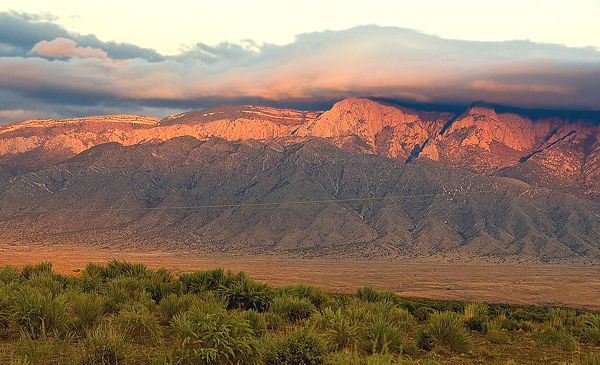
Sandia Mountains, New Mexico.
Bernalillo, New Mexico, is situated on the northwest slope of the Sandia Mountains, approximately 15 miles north of Albuquerque. Originally established along the east side of the Rio Grande, the community is located on the historic Camino Real de Tierra Adentro (“Royal Road”) and the pre-1937 alignment of Route 66.
In 1540, Francisco Vasquez de Coronado led an expedition north of Mexico. In September, they reached Tiguex, a group of Puebloan Indians, near the present-day Bernalillo, where Coronado established winter headquarters. Their stay resulted in what is known as the Tiguex War. After killing hundreds of the native people and burning their villages, the Spaniards moved north in the spring of 1841.
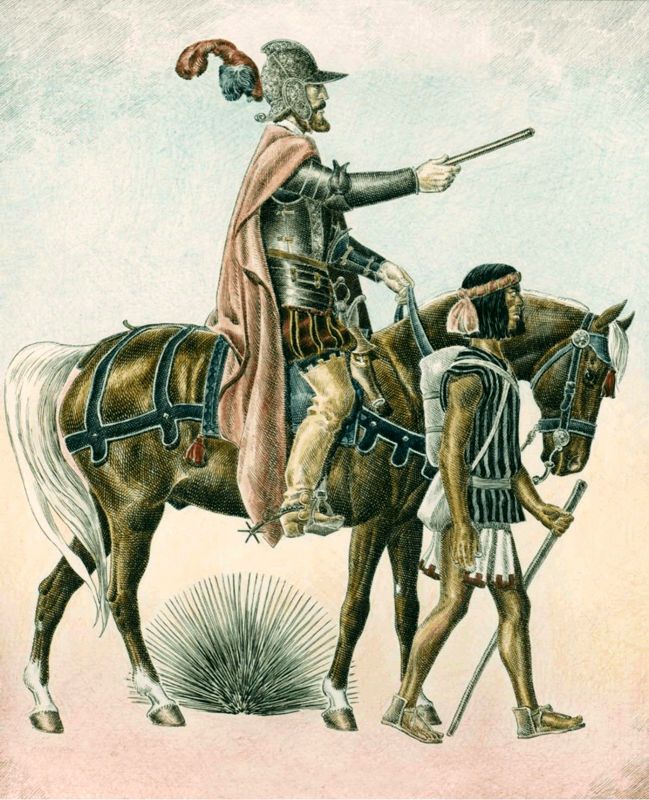
Juan de Onate.
In 1598, Juan de Oñate entered the area and established Santa Fe as the capital of “New Spain.” At this time, land grants were given to several families in the Bernalillo area, including the Perea, Bernal, Gonzales, and Chavez families. Soon, others came to the area, and several Spanish ranches and haciendas were established. The Church of San Francisco was built for the use of its residents. The church included a small chapel in honor of Sandía Pueblo’s patron Saint Anthony. In the 1620s, the wine grape vines were introduced and quickly thrived as families made wine and vineyards flourished. Vineyards still thrive in the region and have become a staple in Bernalillo.
The Hispanic people lived between the Sandia Pueblo in the south and Santa Ana in the north. They got along with the nearby Pueblo peoples and were told before the Pueblo Revolt in 1680. The residents were able to leave the area without being harmed. During the Pueblo Revolt, the Church of San Francisco was burned, but Saint Anthony’s chapel was spared.
All of the revolt survivors fled south to the village of San Lorenzo, which has now been absorbed into El Paso, Texas. Twelve years later, Diego de Vargas set out for Santa Fe in August 1692 to reconquer New Mexico. Before leaving, he vowed to San Lorenzo residents to commemorate the colonists’ suffering and triumph with solemn dance and public celebrations. Today, the people of Bernalillo still observe the “promesa” to San Lorenzo on August 10 by performing “Los Matachines,” a spiritual dance drama that commemorates the conquest.
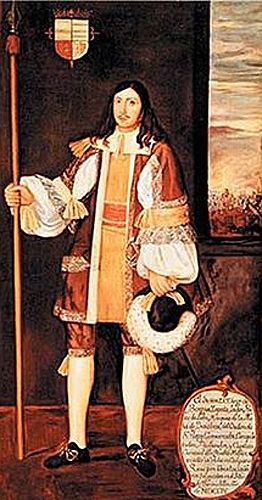
Diego de Vargas.
De Vargas resettled the area in the autumn of 1695, and many inhabitants of the earlier land grants returned to the area. By 1698, the village of Bernalillo was established by settlers and a garrison of soldiers.
In 1701, Felipe Gutierrez, a soldier and reconqueror of New Mexico, was granted 4.5 miles of land. In 1824, Jose Perea was granted three miles. These would soon make up the town of Bernalillo, which by 1776 would be home to 81 people. By 1693, the settlement had become the center of trade throughout the region.
By the time the United States acquired New Mexico in 1846, Bernalillo was one of the best-built towns in the region and was prosperous. Phillip St. George Cook, while leading the Mormon Battalion to California, passed through Bernalillo and described it:
“… the prettiest village in the Territory. Its view, as we approached, was refreshing: green meadows, good square houses, a church, cotton‑woods, vineyards, orchards ‑ these jealously walled in, and there were numbers of small fat horses grazing. The people seemed to be of a superior class, more handsome, and cleaner. But parts of this bottom had sand hillocks, with their peculiar arid growths.”
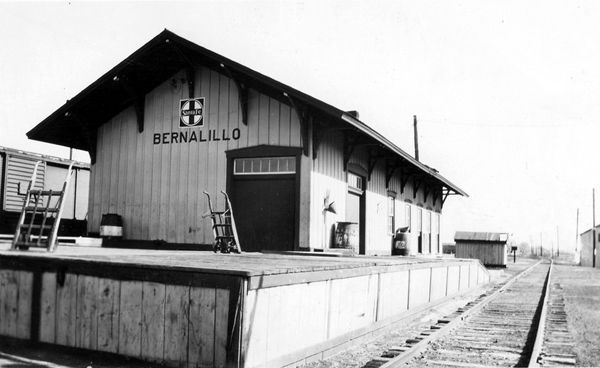
Bernalillo, New Mexico Depot.
The decade following the Civil War saw an influx of eastern and midwestern farmers and livestock raisers seeking cheap land, while others were drawn to the fertile valley and the high, grassy mesas. The telegraph first arrived in the area in 1875, and the Atchison, Topeka, and Santa Fe Railroad followed in 1881.
When Route 66 came through in 1926, the village had become an important trading center and a shipping point for cattle and lumber. However, Route 66 was short-lived, as it was rerouted in 1937, bypassing the area.
Today, the town, which remains a retail and service center for this part of the Rio Grande Basin, has approximately 9,200 residents. It celebrates its rich Spanish and Native American history in its culture, traditions, architecture, and events.
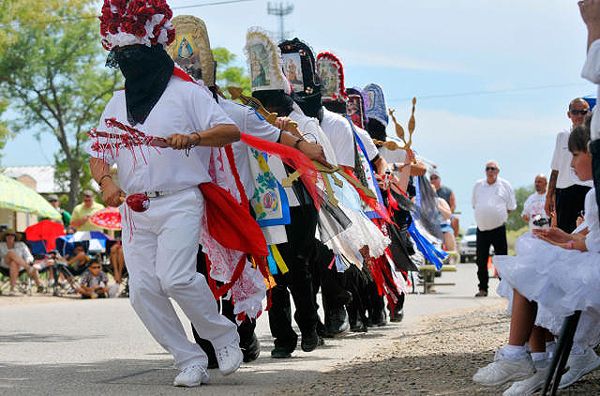
Las Fiestas de San Lorenzo in Bernalillo, New Mexico, courtesy of Albuquerque Journal
Bernalillo continues to celebrate the centuries-old Las Fiestas de San Lorenzo, held annually on August 9, 10, and 11. The focus is on the ritual dance drama known as Los Matachines. Wine and vineyards continue to be important to the town, so the New Mexico Wine Festival at Bernalillo is held each Labor Day Weekend.
The inhabited pueblos of Sandia, Santa Ana, and San Felipe are nearby, and the Kuaua Ruins (Coronado Historic Site), an ancient pueblo, was settled in about 1325. Our Lady of Sorrows Church, built in 1857, is located at 301 S. Camino Del Pueblo. It was added to the National Register of Historic Places in 1977.
Contact Information:
Town of Bernalillo
829 Camino del Pueblo
P.O. Box 638
Bernalillo, New Mexico 87004
505-867-3311
©Kathy Alexander/Legends of America, August 2025.
Also See:
El Camino Real de Tierra Adentro National Historic Trail
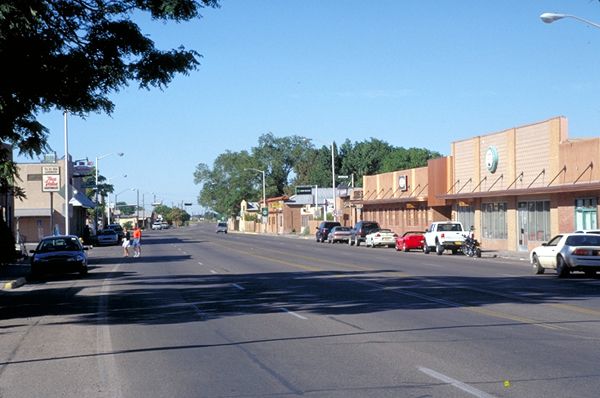
Bernalillo, New Mexico, today.
Sources:
Bernalillo Documents
New Mexico History
Town of Bernalillo
Works Progress Administration, New Mexico: A Guide To The Colorful State, 1940