
By Randall Parrish in 1907
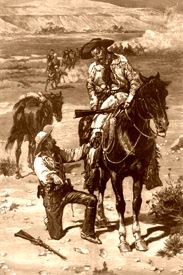
Frontier Scout, by T. De Thulstrup, 1885.
The West owes much to those hardy men who, usually from mere love of adventure, wandered alone or in small companies across the wilderness, ever in advance of the settlements and the troops, exploring the unknown, tracing nameless rivers, uncovering hidden water holes in the harsh desert, penetrating to every nook and corner of the Great Plains and the mountains beyond, discovering the haunts of Indians, the routes which the wheels of caravans could follow with the most significant safety, the best camping spots, the scattered places where wood and water were sure to be found. To such as these — the scouts and guides of the frontier — every prairie traveler, every incoming settler, every officer riding at the head of his troop and seeking the savage foe owed gratitude.
The names of many of these men became renowned upon the Plains and deserve remembrance by this generation. Such were Uncle John Smith, Kit Carson, Jim Bridger, James P. Beckwourth, Uncle Dick Wootton, Jim Baker, Lucian B. Maxwell, Old Bill Williams, Tom Tobin, and James Hobbs, among the old-timers; and W. F. Cody, Bill Hickok, California Joe, Dick Cherry, and Amos Chapman, of a later generation.
By daring, endurance, resourcefulness, and constant devotion to duty, these men have shown endurance, resourcefulness, and constant devotion to duty. These men have won fame that will endure in the history of the Plains. Tireless as the Indian, knowing their traits, characteristics, and habits, reading the secrets of the Plains like an open book, careless of personal danger, and accustomed to loneliness, they remained on the skirmish line of civilization, and for many of them, the fate is unknown.
The scouts of the frontier were numerous, yet only a few proved valuable in actual service. Those who rose out of the ruck did so through sheer ability and have been honored in the reports of the army officers they guided in arduous campaigns of war or exploration. They became famous throughout the length and breadth of the frontier. The reports of John Fremont lifted Kit Carson from obscurity; Custer made the fame of California Joe; Merritt and Carr gave widespread fame to the reputations of Wild Bill and Buffalo Bill. The names of these few Plains celebrities now belong to their country’s history.
Few plainsmen did not know one or all of these great pathfinders and deemed the knowledge worthy of a boast. Uncle John Smith ranged from the Yellowstone to the Gila River and from the upper Missouri to the Rio Grande; not an Indian tribe but had held him as a guest, scarcely a stream along whose waters he had not trapped. In 1826, when a mere boy, he ran away from home and joined a party of Santa Fe traders, and ever afterward, the wilderness held him captive. He married a Cheyenne woman, spoke four Indian dialects besides French and Spanish, and ruled like an autocrat in the Indian trade of the Western Plains. As late as 1869, as an old man, he was one of General Phillip Sheridan’s most trusted guides, competent, tireless, and unerring as a bloodhound on the trail. His life had been one constant adventure, and when in congenial company, he would recount the stirring events of his career for hours. His facial resemblance to President Andrew Johnson was remarkable and led to amusing incidents.
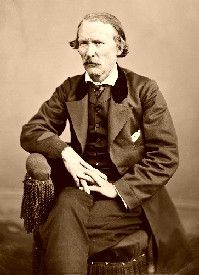
Kit Carson.
Kit Carson was on the Plains and in the mountains for forty-two years, and his name will always be preeminent among famous frontiersmen. In turn, a trader, a hunter, a free trapper, a scout for the army, a guide to explorers and traveling caravans, and finally, a Colonel of Volunteer Cavalry, he had a broader experience than any of his contemporaries.
His life was of hairbreadth escapes, endless adventure, marvelous activity, and usefulness. For eight years, he was the hunter at Bent’s Fort, and all the Plains Indians and the Ute of the mountains knew him well and feared and respected him. He often averted war by his influence in the lodges, but no man ever met it more promptly when it came. He had few superiors as a sign-talker, and as a trailer, he very seldom lost track of those pursued. Inman, who knew him well, thus sums up his characteristics:
“Carson’s nature was made up of some very noble attributes. He was brave but not reckless, a veritable exponent of Christian altruism, and as true to his friends as the needle to the pole. Under the average stature and rather delicate-looking in his physical proportions, he was a quick, wiry man with nerves of steel and possessing an indomitable will. He was full of caution but showed a coolness in the moment of supreme danger that was good to witness.”
While he was visiting Fort Lyon, Colorado, in 1868, an artery in his neck was ruptured, causing his death. Thus passed away the most famous frontiersman of the Great Plains. His burial place was at Taos, New Mexico, where he had long made his home.
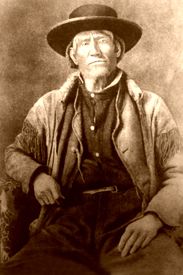
James Bridger.
Jim Bridger began his experience on the Plains with Ashley’s great trapping expedition. During his years of frontier life, he became the peer of the best among mountaineers and plainsmen. Uneducated by the schools and ignorant of all social conventionalities, he possessed a heart overflowing with the milk of human kindness and was generous, honest, and loyal to his friends.
His most important services were as a scout and guide during the early surveys for the first transcontinental railroad. For several years, he was employed by the government, guiding army detachments in Indian campaigns. No man of his time knew the northern Plains or the mountains beyond so thoroughly as he and his eyes first looked out upon the Great Salt Lake in the Winter of 1824-25. After a life of wild adventure, transcending fiction, Bridger died and was buried at Westport, Missouri.
The resemblance of John Smith to President Andrew Johnson has been mentioned above. Inman relates that once, when the President, in his “swing around the circle,” arrived in St. Louis and was riding through the city’s streets in an open barouche, he was pointed out to Bridger, who happened to be in the city.
But, the venerable guide and scout, with supreme disgust depicted on his countenance at the idea of anyone attempting to deceive him, only exclaimed: “Hell! Bill, you can’t fool me! That’s Old John Smith.” On another occasion, discovered by a friend sitting on a dry-goods box in one of St. Louis’ narrow streets, the old frontiersman thus relieved his feelings: “I’ve been settin’ in this infernal canyon ever since mornin’, waitin’ fer someone to come along an’ invite me to take a drink. Hundreds o’ fellers have passed both ways, but none of ’em has opened his head. I never seen sich a onsociable crowd.”
Bridger guided Sir George Gore on his famous hunting trip in 1855-57, during which the party killed over 40 grizzly bears, 2,500 buffalo, and an unknown quantity of smaller game. Gore had with him fifty helpers, including secretaries, stewards, cooks, fly-makers, dog-tenders, and personal servants. His was one of the strangest outfits ever seen on the Plains. During their trip, the baronet gave Bridger a copy of the adventures of Baron Munchausen to read. After painfully deciphering the text, the frontiersman confessed that he’d be “dog’oned ef he swallowed everything that thar Baron Munchausen said,” and thought he was a “darned liar”; yet he acknowledged that some of his adventures would be equally marvelous “if writ down in a book.”
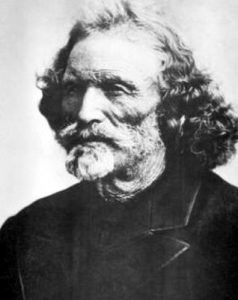
Jim Baker, mountain man.
Jim Baker ranked well up with these others as a plainsman and mountaineer. Next to Carson, he was Fremont’s most valued scout. An Illinoisan, he was 18 years old before he appeared on the Plains as an employee of the American Fur Company. So far as is known, he was never again east of the Missouri River. Having married a Snake Indian and spent much of his life in their company, he adopted many of their superstitions and habits.
He drank heavily and squandered the money he had earned from his successful trapping while off duty. Bent’s Fort on the Arkansas River became his chosen outfitting point, but for months, he would disappear into the wilderness. So successful was he in snaring wild game that he sold $9,000 worth, and his friend General Marcy of the United States Army made the old fellow famous in the pages of his books on border life.
Jim Beckwourth and Others
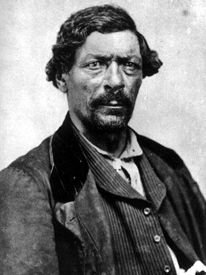
James Pierson Beckwourth.
Jim Beckwourth was one of the odd characters of the Wild West. He was a mulatto of medium height but great muscular power, and no man in the mountains or on the Plains ever led a more adventurous life. He was a hunter, trapper, trader, scout, and Indian fighter, and, being a born leader of men, he became head-chief of a great tribe of savages, the Crows. Historians have seen him from vastly different viewpoints. Parkman wrote: “He is a ruffian of the worst class; bloody and treacherous, without honor or honesty; such, at least, is the character he bears on the Great Plains. Yet in his case, the standard rules of character fail; though he will stab a man in his slumber, he will also do the most desperate and daring acts.” This statement is not upheld by those who knew him intimately — Carson, Maxwell, and the Bents. To them, he appeared the most honest of all Indian traders and a man to be trusted in any emergency. He first went to the mountains with Ashley in 1825. His fame largely rests on his published biography, some of it no doubt true, but much will prove him a “charming liar.”
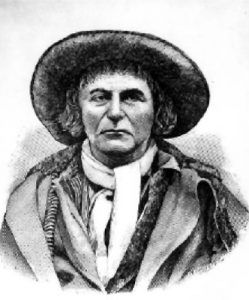
Richens Lacey “Uncle Dick” Wootton.
Uncle Dick Wootton passed his life on the Plains in the neighborhood of the Santa Fe Trail, along which he first passed at 19 as a teamster in a trading caravan. He became noted as an Indian fighter, and from his intimate knowledge of the entire Southwest. Bent’s Fort was his rendezvous for several years, and he was a great favorite, not only because of his prowess in the field but also because of his fund of anecdotes about the campfire. His earliest encounter with Indians occurred at the crossing of Pawnee Fork, and later, he had another tough fight in the same spot. In 1866, Wootton built a log house in Raton Pass and remained there until his death, collecting tolls from travelers who had used the road he had made across the mountains. Frequently, he was obliged to extract pay at the muzzle of his rifle, but very few ever got scot-free from him. He died at the age of 90, and many of his adventures have been recorded in the pages of Inman.
Old Bill Williams, the guide who led Fremont astray on his last expedition, was a unique character. He had been a Methodist preacher in the East but was on the Plains long before Kit Carson left Missouri. No man knew the mountains better than Jim Bridger. A man of education, he quickly mastered the different languages of the tribes, but to both Indians and Mexicans, he remained an unsolvable riddle and a terror. As a trader, he was a total failure, and many of his companions considered him partially insane, although he was brave, warm-hearted, and generous. Indians finally killed him.
James Hobbs had a remarkable career. For years, he was a prisoner among the Indians, a soldier in the war with Mexico, an officer in the revolt against Maximilian, and an Indian fighter, miner, trapper, trader, and Government scout.
Tom Tobin was the last of the old regime’s famous trappers and hunters to pass away. He was a quick-tempered Irishman, red-faced, of average stature, always ready for a fight or a frolic. He was present at most of the famous Indian battles of the early explorers. Still, his most outstanding achievement was killing the notorious Mexican bandit Espinosa in a desperate hand-to-hand conflict in 1864.
William F. Cody and Amos Chapman
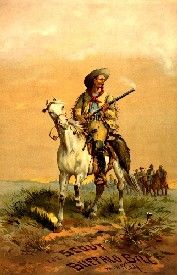
Buffalo Bill, 1872.
William F. Cody (Buffalo Bill) and Amos Chapman were the best-known border men of later days and were worthy to rank with those mentioned above. Cody began his career on the Plains as a mere boy on a caravan trip to Santa Fe, became a teamster on a “bull” train, driver on the Overland, and Pony Express rider before he was of age. As early as 1863, he was employed as a guide and scout for an expedition against the Kiowa and Comanche. He later carried dispatches through the hostile Indian country between Forts Lyon and Larned. Many of his adventures, including his desperate duel with Yellow Hand, a Cheyenne chief, have been told in the books where he collaborated with Colonel Inman. His famous appellation was won during his employment as a hunter for the Kansas Pacific Railroad Construction Company in 1867-68. In less than 18 months, he killed nearly 5,000 buffalo, which were eaten by the 1,200 workmen employed in track-laying.
Amos Chapman was 15 years old and was employed by the government as a scout on the Plains. During this life of constant peril and exposure, one of his most heroic acts occurred while he was bearing dispatches for General Miles from his camp on McClellan Creek to Camp Supply in Indian Territory. The dispatching party consisted of six men. Early in the morning, after a hard night’s ride, they were suddenly attacked near the Washita River by a band of over 100 Kiowa and Comanche warriors. Colonel Dodge thus describes what followed:
Chapman said, “Now, boys, keep those infernal redskins off me, and I will run down and pick up Smith and bring him back before they can get at me.” Laying down his rifle, he sprang out of the buffalo wallow, ran swiftly to Smith, seized and attempted to shoulder him… “I lay down,” said Chapman, “and got his chest across my back and his arms around my neck and then got up with him. It was as much as I could do to stagger under him, for he couldn’t help himself a bit. By the time I had got 20 or 30 yards, about fifteen Indians came for me at full speed of their ponies.”
“The first intimation of the presence of Indians was a volley which wounded every man of the party. In an instant, the Indians appeared on all sides. Dismounting and abandoning their horses, the brave band moved for 100 yards to a buffalo wallow, a shallow natural depression in the prairie. Being slightly wounded, Chapman and Dixon worked hard and fast to deepen this depression, and as soon as it was sufficiently deep to afford some cover, it was occupied, and the work continued from within. Smith had fallen from his horse at the first fire and was supposed to be dead…”
The boys in the buffalo wallow opened on the Indians, and Amos ran for it.
“When I was about 20 yards of the wallow,” he continued, “a little old scoundrel I had fed 50 times rode almost on to me and fired. I fell with Smith on top of me, but as I didn’t feel pain, I thought I had stepped into a hole. The Indians couldn’t stay around there a minute; the boys kept it red-hot, so I jumped up, picked up Smith, and got safe in the wallow. “Amos,” said Dixon, “you are badly hurt. “No, I am not,” said I. “Why look at your leg,” and sure enough, the leg was shot off just above the ankle joint, and I had been walking on the bone, dragging the foot behind me, and in the excitement, I never knew it, nor have I ever had any pain in my leg to this day.”
Compiled and edited by Kathy Alexander/Legends of America, updated August 2025.
As it appears here, the content has been edited for clarity and ease for the modern reader. About the Author: Adventures and Tragedies on the Overland Trail was written by Randall Parrish as a chapter of his book, The Great Plains: The Romance of Western American Exploration, Warfare, and Settlement, 1527-1870; published by A.C. McClurg & Co. in Chicago, 1907. Parrish also wrote several books, including When Wilderness Was King, My Lady of the North, Historic Illinois, and others.

Frontier Scout by Frederic Remington.
Also See:
Early Traders on the Santa Fe Trail
Famous Men of the Santa Fe Trail
Santa Fe Trail – Highway to the Southwest
Other Tales by Randall Parrish:
Adventures and Tragedies on the Overland Trail
Beginning of Settlement in the American West
Border Towns of the American West
Mushroom Towns of the American West