
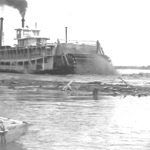
Paddlewheel Steamboat on the Missouri River in Doniphan County, Kansas.
By Jerry L. Walker Sr.
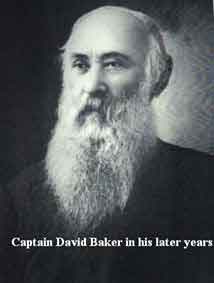
My father-in-law, William Aldon Baker, along with his father Abner Baker and uncle, Captain David Baker, were unsuccessful in 1882 in their effort to raise the steamboat Pontiac. The Pontiac had sunk in the Missouri River in 1859 between Atchison, Kansas, and St. Joseph, Missouri. My wife’s father, 16 years old at that time, wrote about the incident in his memoirs the month before he died in 1955.

Available Now on Amazon.
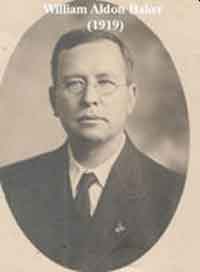
Those memoirs were the basis for my historical fiction book, “May to December Miracles”. Although historical fiction, the facts, including this excerpt concerning the raising of the Pontiac, are accurate. At the time of this attempt, my wife’s grandfather and family lived on an island in the Missouri River about two miles upstream from the now non-existent town of Doniphan, Kansas, and near Rushville, Missouri.
They had ended up on the island as the result of the failed attempt by Abner Baker to move the family from Atchison, Kansas, to the Dakota territory. He dreamed of a prosperous life after preempting land in the Dakotas. But instead of making the journey in a covered wagon as most pioneers would have done, Abner had the impossible idea of getting to the Dakotas by building a boat and pulling it upriver to the new territory. After several days of tortuous travel and having made only a very few miles on the river, the family spent the night on what they thought was a sandbar but turned out to be an island. The next morning, the sole inhabitant of the island informed them that there was a vacant cabin and some partially cleared land on the other side of the island, which could be theirs for the taking. They took it.
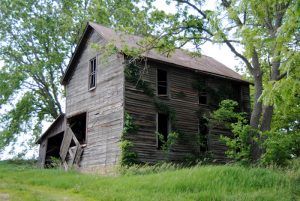
An old House still stands in Doniphan, Kansas, by Kathy Alexander.
Father Abner subsequently supported his family by farming the small acreage, cutting and selling firewood to the residents of Doniphan, and fishing. It was during one of these fishing trips upriver, when the river was extremely low, that they discovered the top of the Pontiac. Below is the excerpt from my book that describes their endeavor to raise the steamboat:
[From “May to December Miracles”]
The following spring, the cantankerous river in our neighborhood dropped lower than the region’s old timers had remembered.
An ice jam somewhere upstream caused the water in the river bed in our area to sink really low. This low water actually improved fishing. While going upriver one day, we saw some heavy timbers sticking out of the water. On examining the timbers, we concluded them to be the top part of a steamboat. Papa decided it might be the Old Pontiac, which had sunk in that neighborhood of the river in 1859. We marked the place, and in the fall, my father and his brother Dave spent quite a bit of time and money trying to raise the boat. But the Missouri River is jealous of its treasures. Quicksand in the river bottom proved too much of a barrier to raising the old steamboat. Uncle Dave and Papa did not have the right equipment to get the job done, if it could have been done at all. It was money, mostly Uncle Dave’s, and effort down the drain.
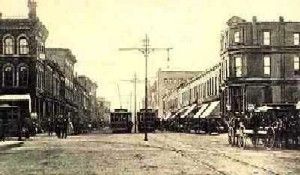
Early Atchison, Kansas.
Papa kept a clipping of a newspaper article that discussed their potential raising of the Pontiac. I’ve written below the exact wording of the article, which appeared on January 27, 1883, in the Atchison Globe:
‘In connection with the announcement that the Messrs Baker have at last penetrated the hold of the “Pontiac”, which went down in the river above the city in 1859, and raised two of the 600 barrels of whiskey (there is no truth in it, however).
It may be interesting to know that J.P. Coffman & Co., the original owners of the liquor, have sent in a claim for it, accompanied by the original bill of lading and a statement from the Captain of the “Pontiac” that they are the owners of the cargo. Everest and Waggoner have the claim and will push it for all it is worth. They claim that there is no question that Coffman can recover the liquor, although the Bakers would have to be remunerated for their labor. If the entire 600 barrels are found in good condition, the find will be worth $150,000.’
Papa, like me, was a teetotaler. So was Uncle David. In fact, he and Papa got into trouble more than once in Atchison for trying to force saloons to close. Whiskey or not, they would have liked the riches dreamed of, which would have been theirs if they had been successful in raising the Pontiac.
 “On the other hand,” Papa said, “I was glad I wouldn’t be responsible for the evil that 32,000 gallons of whiskey would have brought to the world.”
When I asked him about the newspaper statement that he and Uncle David had actually recovered two of the whiskey barrels, he just laughed and said, “That was David’s doin’. He knew we needed more funds, actually, to raise her. He figured the story about the two whiskey barrels might be just enough bait to get the investment needed to finish the job. Dave had already spent over $500 on the enterprise and estimated it would take another $1,000 to sink a caisson to gain entry into the hold. He wasn’t about to invest that much more money into such a gamble, but was willing to continue if investors could be found. Unfortunately, there were no takers.”
That was another of my father’s questionable ventures. I think he decided that God intended for him to return to his roots of being only a farmer.
©Jerry L. Walker Sr., submitted April 2022, updated May 2025.
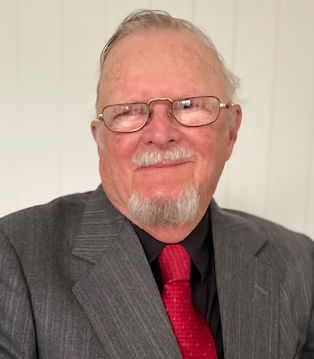 About the author: Jerry L. Walker Sr. was born in St. Joseph, Missouri, on June 14, 1937. His family moved to Portsmouth, Virginia, in 1941, where his father was a master crane operator during World War II at the Portsmouth Naval Yard. The family returned to their Missouri home in 1945 after the war, when Jerry was ten years old.
On June 5, 1948, while visiting relatives in Liberal, Missouri, Jerry suffered severe injuries to both eyes when a firecracker, in a gravel-filled bottle, exploded into his eyes. He has been legally blind, on and off, ever since that accident, but is currently enjoying much improved vision following a cornea transplant in 2019.

Available Now on Amazon.
Jerry graduated from Central High School in St. Joseph in 1955 and then from St. Joseph Junior College (now Robert Morris University) in 1957. He obtained a bachelor’s degree in Chemical Engineering from the Missouri School of Mines (now Missouri University at Rolla) in Rolla, Missouri. Jerry began working for Hagan Chemicals and Controls right out of college. Hagan subsequently became Calgon Corporation, a division of Merck Chemicals. He retired from Calgon after working at their Pittsburgh, Pennsylvania headquarters in 1992, following a successful career in research and development. During that time, he was the holder or co-holder of many patents related to industrial water treatment chemicals. He was also prominent in management within the Calgon Research and Development Department.
Jerry and his wife of 61 years are in good health. They enjoy riding their tandem bicycle, hiking, playing corn hole, and socializing with their many friends during the Winter months in Florida and during the rest of the year at their home at the Lake of the Ozarks in Missouri.
“May to December Miracles” is Jerry’s first book, but hopefully not his last.
Also See:
Doniphan, Kansas – A River Ghost Town