
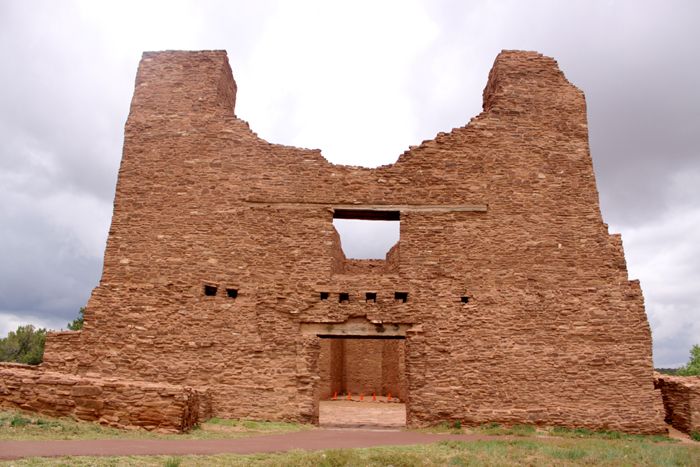
Quarai Church, New Mexico, by the National Park Service.
The Quarai Pueblo and its Spanish mission, Nuestra Señora de la Purísima Concepcion de Quarai, are located in central New Mexico. A National Historic Landmark, this site is part of the Salinas Pueblo Missions National Monument, including Abo and Gran Quivira.
The Salinas Valley has been home to various peoples and cultures for centuries. As early as the 10th century, Mogollon and Ancestral Puebloan tribes established pueblos in the valley that served as significant trade centers between the people of the Rio Grande region and the Plains Indian tribes.
Early Puebloan peoples moved into the Salinas Valley around 1200 AD and, based on artifacts found at the site, began living at Quarai by about 1250. However, by about 1400, these people had moved on. Their descendants later moved back to the site before the Spanish initially made contact in the late 16th century. The Salinas Valley was a rich, fertile area with several other pueblos, including Tajique and Chililí, existing nearby. Tiwa speakers likely occupied all three of these pueblos. Neighboring Abo, Gran Quivira, and Tabira were Tompiro-speaking communities.
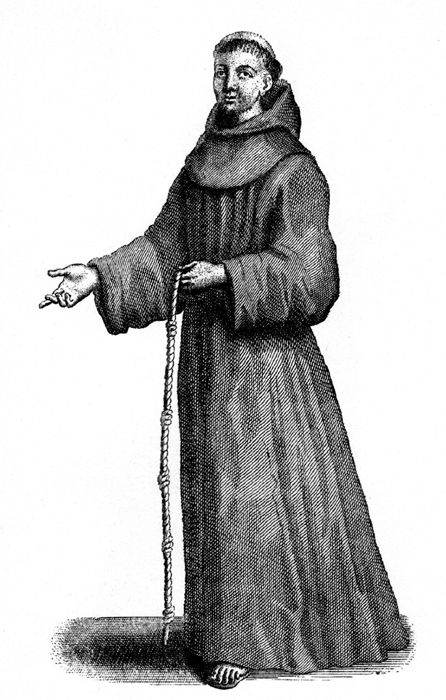
Franciscan Friar.
Although the Spanish visited the Salinas Valley and several of its pueblos as early as 1540, historical records officially place the Spanish missionaries at Quarai in 1626. The Spanish had already successfully established missions at Chililí and Abo. In December 1625, the Fray Juan Gutierrez de la Chica was sent to Quarai to initiate a new missionary effort. Upon his arrival, Gutierrez reportedly met little resistance from the native population and soon began planning a new church and convento.
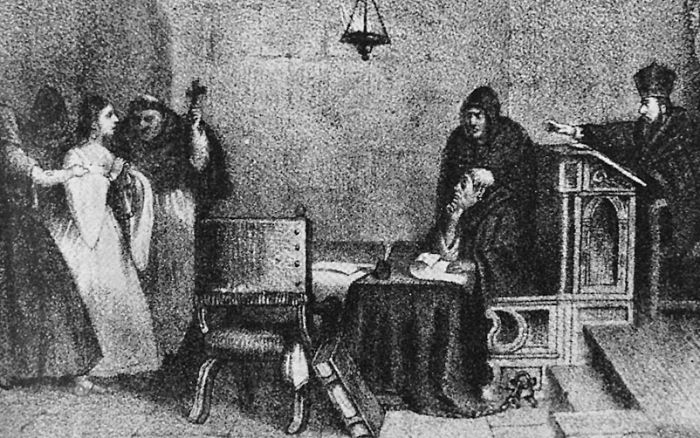
Hearing Before the Inquisition.
During the 17th century, Quarai became a significant part of the Spanish missionary efforts throughout the Southwest and New Mexico. In 1633, Fray Esteban de Perea, head of the powerful Holy Office of the Inquisition for New Mexico, arrived at Quarai to assume leadership. The mission complex at Quarai briefly served as the residence of the commissary of the Holy Office of the Inquisition for all of New Mexico.
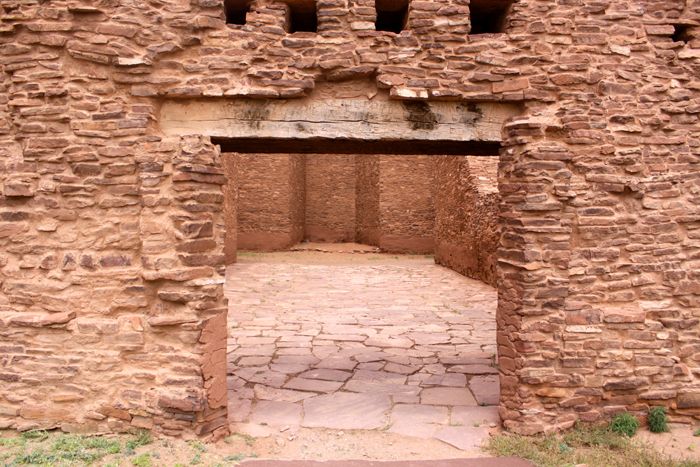
Quarai Church Entrance, by the National Park Service.
At its peak, the Quarai pueblo had approximately 1,000 rooms and housed between 600 and 700 residents of native and Spanish descent. The pueblo buildings were arranged around several small plazas. In addition to the Catholic religion and customs, the Franciscan friars introduced new agricultural and production methods. Extensive farming took place adjacent to the mission and on surrounding lands. Still, the native population at Quarai struggled under the Spanish government-imposed encomienda system—one that demanded annual agricultural payments be made to Spanish soldiers in exchange for military protection.
By the early 1670s, a series of droughts, Apache attacks, and unrest within the Spanish government eventually led to the abandonment of Quarai. Native inhabitants are believed to have fled and joined their linguistic kinsmen along the Rio Grande. By 1678, the Salinas Valley pueblos and their missions had met the same fate, leaving only empty buildings, pottery shards, and other artifacts behind for later excavation and interpretation.
Much later, in the early 1800s, settlers would return to Quarai, constructing the Lucero Structures, including a defensive Torreon and the later Manzano Church. In the early 1820s, Miguel, Juan Lucero, and their families were the first to return to Quarai when the Quarai church and convento were still in fair condition. They lived in the rooms of the convento, patching walls and fixing remaining roofs. Later, rooms were added, and new houses were built from the mission rubble. However, around 1830, the Apache began to raid the area. It burned the Quarai church and convento, causing the remaining roof to collapse and destroying much of what the Lucero family had built. This led to Quarai’s second abandonment.
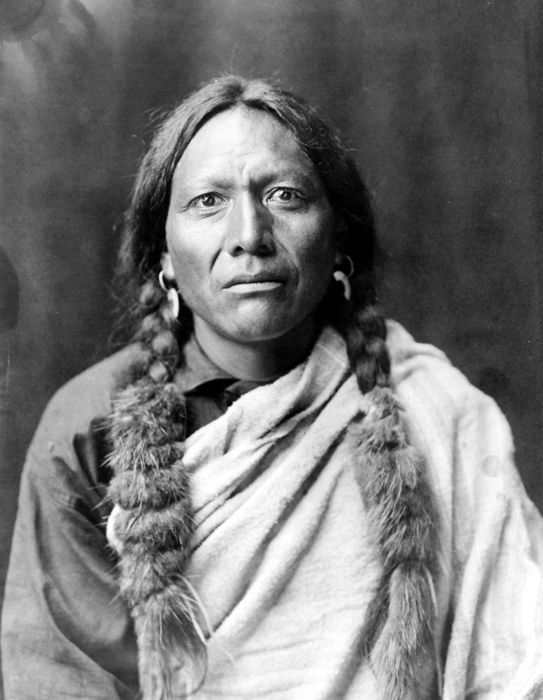
Pueblo Man by Edward S. Curtis, 1905.
Some of the Lucero family returned in the 1840s, constructing new structures, including a Torreon southeast of the mission. Miguel Lucero sold the land to Bernabe Salas in 1872, but this was short-lived. Salas abandoned the Lucero structures and moved to the nearby town of Punta de Agua by 1882. The remains of these structures are still visible today along the Quarai interpretive trail.
Since 1913, several studies and excavations have taken place at Quarai. In the early 1930s, the site became a New Mexico State Monument. The National Park Service took over the ruins in the 1980s. Though Quarai has been excavated and stabilized, much of the original ancient village and the 17th-century pueblo remain buried today.
However, visitors to the site today will note the impressive, stabilized mission ruins standing against the landscape. A self-guided trail takes those who want to explore the church and the 17th-century pueblo. The historic landmark contains interpretive signs, a visitor center, and a small museum stand nearby to help guests understand this important American Indian and Spanish heritage site.
Access to the ruins and the Pueblo site is through the Salinas Pueblo Missions National Monument, which offers interpreted tours and self-guided walks through the ruins of Quarai and Abo and Gran Quivira.
The Salinas Pueblo Missions National Monument is 10 miles west of Mountainair, New Mexico, off Route 60. The main visitor center is on the corner of Ripley and Broadway Streets in Mountainair. Admission is free at all times. Quarai is eight miles north on NM 55 and one mile west.
More Information:
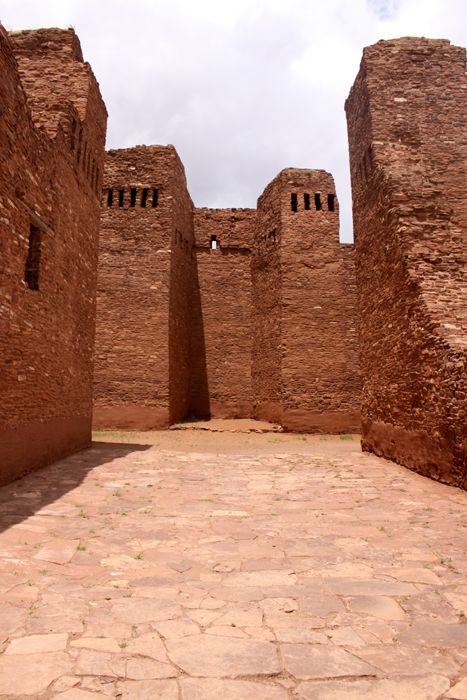
Quarai Mission Church, New Mexico, by the National Park Service.
Salinas Pueblo Missions National Monument
PO Box 517
Mountainair, New Mexico 87036-0517
505-847-2585
©Kathy Alexander/Legends of America, updated March 2025.
Also See:
Missions & Presidios of the United States
Salinas Pueblo Missions National Monument
Sources: