
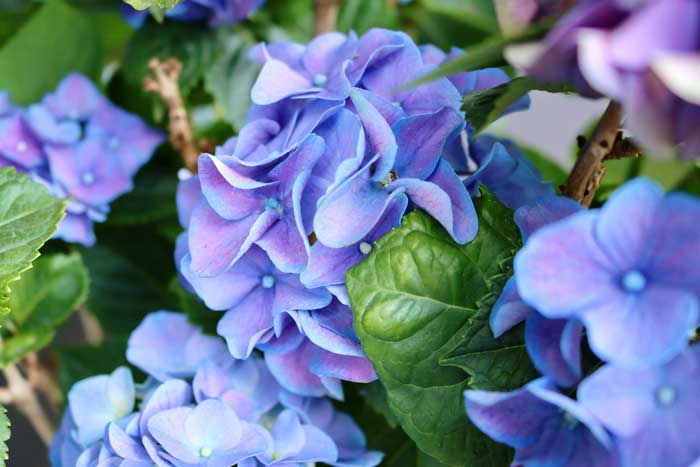
Photo by Lucille Oh on Unsplash
By Jackie Edwards
Flourishing amidst the global stage, the U.S. proudly stands in the top three gardening nations. Over half of its population, 55%, are committed green thumbs crafting lovely spaces, while 43% cultivate food in their backyards. From the widespread presence of over 29,000 community gardens to more than a thousand botanical havens, America’s love for gardening is littered across its lands. Tracing its roots back to the 1600s, this affection for flora continues to flourish throughout our history, synergizing local practices and artistic inspirations.
Monticello: A Jefferson Legacy

This photo was taken in October 2005 at Monticello, the home of Thomas Jefferson, in Charlottesville, Virginia. The reflection is from the fish pond, where Jefferson would temporarily keep fish before preparing them for home meals. Photo by Matt Kozlowski.
Thomas Jefferson is perhaps best known as the principal author of the Declaration of Independence, a foundational document that expresses principles of liberty and self-determination. As the third President of the United States, from 1801 to 1809, he made significant contributions during his tenure, including the Louisiana Purchase, which greatly expanded the territory of the United States. The U.S. acquired a vast territory from France, effectively doubling the country’s size. In addition, he was also the founder of the University of Virginia, where he designed the campus and its curriculum. Today, it remains one of the premier institutions of higher learning in the U.S.
Jefferson was known, too, as an advocate for religious freedom and the principle of the separation of church and state. He played an important role in promoting agriculture and American agricultural practices. In fact, his agricultural experiments at Monticello, including crop rotation and cultivation of new crops, influenced American farming.
The Gardens at Monticello are situated on the grounds of Thomas Jefferson’s home in Monticello, Charlottesville, Virginia. It was planned in the early 1770s when he inherited the property from his father. Over the years, Jefferson developed a comprehensive garden plan incorporating both ornamental and productive elements. Influenced heavily by European garden designs, the layout and features at Monticello are notable for their formal and geometric plan, terraced levels, brick walkways, and meticulously designed beds. A vegetable garden, fruit orchards, flower beds, and ornamental trees are cleverly blended into the overall scheme, as well as the employment of gardening technique experiments and crop varieties. As an avid plant collector, Jefferson introduced many unusual species to America, including crops such as tomatoes and peppers, thereby diversifying agriculture. He recognized the therapeutic value of gardens, saying once, ‘No occupation is so delightful to me as the culture of the earth, and no culture comparable to that of the garden.’ The design of Monticello and its gardens encouraged Jefferson to relax and contemplate, taking in the magnificent views.
The Oldest Surviving Botanic Garden

East facade of John Bartram House, Bartram’s Garden, Philadelphia, Pennsylvania. Photo by Joel T. Fry.
Bartram’s Garden holds a special place in American garden history because it is often regarded as the oldest existing botanical garden in North America. It was established in 1728 by John Bartram, a self-taught botanist, explorer, and plant collector. His garden played a crucial role in the early study and cultivation of American plants. Along with his son William, Bartram collected and cataloged numerous plant species native to America. Many of these plants were also introduced to European horticulture. John Bartram also communicated with leading scientists and botanists, including Carl Linnaeus, the father of modern taxonomy, whose detailed descriptions and drawings of plants were instrumental in advancing the understanding of North American flora.
The botanical garden boasts a rich collection of native American plants, some of which may no longer exist in the wild due to habitat loss, underscoring the importance of the site as a resource for preserving local flora. Beyond its botanical significance, the garden was also a hub of scientific and horticultural exploration. Bartram was appointed the ‘Royal Botanist’ by King George III. Today, Bartram’s Garden is an educational and cultural destination that offers educational programs, tours, and events promoting an understanding and appreciation of plants, nature, and history. The garden is also involved in various environmental and conservation initiatives, including the restoration of native habitats along the Schuylkill River and the promotion of sustainable gardening practices.
Mount Vernon Estate
.jpg "Botanica Garden, Mount Vernon, Near Alexandria, Virginia. Photo by Ken Lund.")
Botanica Garden, Mount Vernon, Near Alexandria, Virginia. Photo by Ken Lund.
Located in Virginia along the Potomac River, the Mount Vernon estate was the home of George Washington, the first President of the United States. Its construction and development took place over several decades, including the expansion and renovation of the existing house. Wings were added to the house, creating the iconic symmetrical appearance that is now associated with Mount Vernon. Numerous outbuildings were built on the estate, including a kitchen, slave quarters, barns, stables, and a greenhouse, all of which were essential for the plantation’s operation.
Much of the 8,000 acres of land was used for farming, including tobacco cultivation. A portion of it was also devoted to gardens and landscaping. Washington was deeply interested in horticulture and landscaping. He designed and cultivated gardens, orchards, and a botanical garden. These gardens featured a variety of plants, with Washington even conducting experiments on crop rotation and agricultural practices. The botanical garden boasts a carefully curated collection of plants from around the world, featuring a diverse array of ornamental flowers, herbs, and trees. Although the gardens fell into disrepair after Washington died in 1799, the Mount Vernon Ladies’ Association acquired and preserved the estate in 1858. Today, the gardens remain well-maintained and restored to reflect their historical appearance. They are a testament not only to Washington’s dedication to both aesthetics and practicality but also to his vision and the horticultural practices of the 18th century.
Historical gardens in America hold significant importance for several reasons. They are a tangible link to America’s past, offering a window into the country’s cultural and historical heritage. They serve as valuable educational resources, preserve biodiversity, and offer cultural and recreational spaces.
©Jackie Edwards, for Legends of America, October 2023, updated July 2025.
About the Author – Jackie Edwards was a mining engineer before becoming a semi-retired freelance writer.
Also See:
Revitalizing Abandoned Coal Mining Towns: Exploring Opportunities for Repurposing and Sustainability
Evolution of Grazing and Agriculture
George Washington Carver & Scientist, Educator, Inventor
Augusta, Georgia – The Garden City
Herbs, Plants, and Healing Properties