
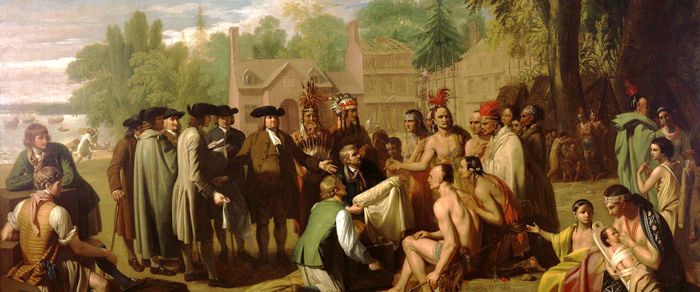
Colonial America.
When the French and Indian War concluded in 1763, neither the British subjects in North America nor Britain could have predicted the conflicts that would arise between the mother country and its colonies. However, the roots of these conflicts were sown during the war and as a result of it. Known in Europe as the Seven Years’ War, the French and Indian War was a global conflict. Although Great Britain emerged victorious against France and its allies, this victory came at a steep price. By January 1763, Great Britain’s national debt had exceeded 122 million pounds, an immense amount for that period. The annual interest on this debt alone surpassed 4.4 million pounds. Addressing the interest repayment became a primary concern for the King and his ministers.
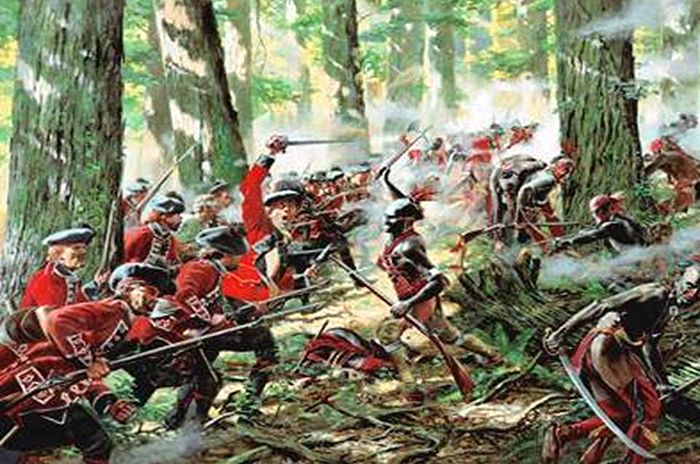
Pontiac’s Rebellion.
The issue of imperial debt was not the only challenge British leaders faced after the Seven Years’ War. Maintaining order in America proved to be a significant hurdle. Despite Britain gaining Canada from France, prospects for peaceful relations with Native American tribes were bleak. Consequently, the British decided to maintain a standing army in America, a choice that would lead to various conflicts with the colonists. Additionally, an Indian uprising on the Ohio frontier—known as Pontiac’s Rebellion—resulted in the Proclamation of 1763, which prohibited colonial settlement west of the Allegheny Mountains. This decree would further exacerbate tensions with land-hungry settlers and speculators, including figures like George Washington.
British leaders felt a pressing need to tighten their control over the empire. Although laws governing imperial trade and navigation had existed for generations, American colonists were known for frequently evading these regulations. They even traded with the French during the recently concluded war. From the British perspective, it was only fair that American colonists contribute their share to the costs of their defense. If stricter controls on navigation and trade could generate additional revenue, that would be even better. As a result, the British began their efforts to reform the imperial system.
In 1764, Parliament enacted the Sugar Act to increase revenue in the colonies by taxing molasses. Although this tax had been in effect since the 1730s, smuggling and lax enforcement had minimized its impact. However, this time the tax would be enforced more strictly. An outcry arose from those affected, prompting the colonists to implement several effective protest measures, including boycotting British goods. Then, in 1765, Parliament passed the Stamp Act, which imposed taxes on paper, playing cards, and every legal document created in the colonies. Since this tax affected virtually everyone and extended British taxation to goods produced and consumed domestically, the reaction in the colonies was widespread. The Stamp Act crisis was the first of many conflicts over the next decade and a half.
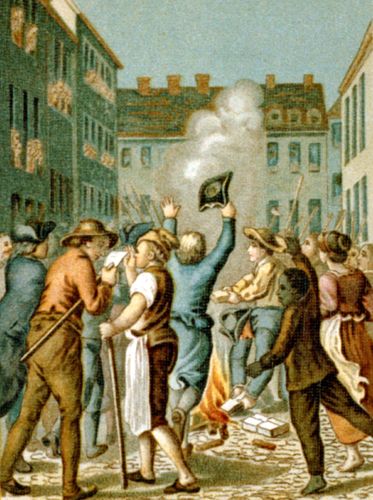
Burning of the Stamp Act.
Even after the repeal of the Stamp Act, many colonists continued to have grievances with British colonial policies. One example is the Mutiny Act of 1765, which required colonial assemblies to house and supply British soldiers. Many colonists objected to a “standing army” in the colonies and resented being obligated to provide housing and supplies. They viewed this as another attempt to tax them without their consent, albeit in a disguised form. As a result, several colonial assemblies refused to vote on the mandated supplies. In response, the British disbanded the New York Assembly in 1767 to make an example of it. Many non-New Yorkers resented this action, realizing their assembly could be similarly shut down.
The Stamp Act prompted Americans to question the fundamental relationship between their locally elected colonial legislatures and the British Parliament, in which Americans had no elected representation. Many colonists began to assert that only an elected legislative body had legitimate taxation powers. The British countered this argument by pointing out that even in England, many people could not vote for delegates to Parliament. They claimed that all English subjects enjoyed “virtual representation” in a Parliament that considered everyone’s interests when formulating policy. However, Americans found the “virtual representation” concept distasteful, mainly because they had elected their own domestic legislators for over a century.
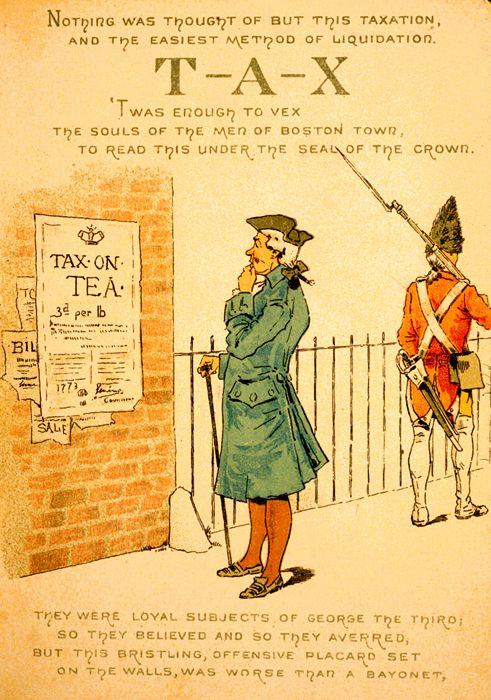
Colonial Taxes.
In 1767, Parliament also enacted the Townshend Duties, taxes on paper, paints, glass, and tea, goods imported into the colonies from Britain. Since these taxes were levied on imports, the British considered them “external” rather than internal taxes such as the Stamp tax. The colonists failed to understand the difference between external and internal taxes. In principle, most Americans admitted a British right to impose duties intended to regulate colonial trade; after 1765, however, they denied Parliament’s power to tax to raise funds or revenue. Again, they saw the purpose of the Townshend Duties as raising revenue in America without the taxpayers’ consent.
The British also established a board of customs commissioners, whose purpose was to stop colonial smuggling and the rampant corruption of local officials who were often complicit in such illegal trade. The board was quite effective, particularly in Boston, its seat. Little wonder then that Boston merchants were angry about the new controls and helped organize a boycott of goods subject to the Townshend Duties. In 1768, Philadelphia and New York joined the boycott. As the boycott spread, harassment of customs commissioners grew apace, especially in Boston.
As a result, the British posted four regiments of troops in Boston. The presence of British regular troops was a constant reminder of the colonists’ subservience to the crown. Since they were poorly paid, the troops took jobs during their off-duty hours, thus competing with the city’s working class for jobs. The two groups often clashed in the streets. In March 1770, just when Parliament decided to repeal the Townshend Duties (on everything except tea), but before word of the repeal reached the colonies, the troops and Boston workers again clashed. This time, however, five Bostonians were killed, and another dozen or so were wounded. Almost certainly, the “Boston Massacre,” as colonists called the episode, was the result of confusion and panic by all involved. Even so, local leaders quickly publicized the incident as a symbol of British oppression and brutality.

Boston Massacre.
Overall, American revolutionaries viewed English actions from 1767 to 1772 with suspicion. They read in British policy a systematic conspiracy against their liberties. As the colonists saw it, tax revenues fed corrupt British officials who used monies they coerced from the colonies to line their pockets, hire additional tax collectors, and pay mercenaries to come to America and complete the process of “enslaving” colonists.
Compiled by Kathy Alexander, updated March 2025.
Also See:
Heroes and Patriots of America
Initial Battles for Independence
Source: Library of Congress