
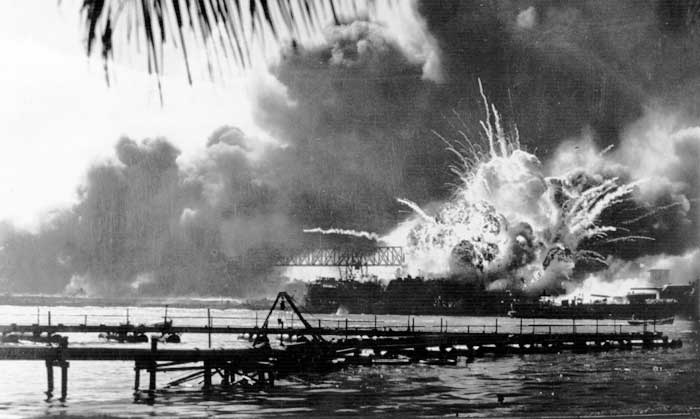
Pearl Harbor, Hawaii, is Attacked, December 7, 1941.
by Jackie Edwards
Over 80 years since the Japanese bombed the prominent military base of Pearl Harbour during World War II, the last known survivor of the attack on the USS Arizona has recently died at the age of 102. Lou Conter, a quartermaster, was standing on the main deck when the bombs were dropped, and despite the ship being lifted 30 to 40 feet out of the sea, he survived. The assault on Pearl Harbour was a turning point in World War II and highlighted the strategic importance of the Hawaiian base for American defense in the Pacific. Interest in establishing a permanent presence in the area grew during the nineteenth century, and a naval base was fully established by 1919. There are now between 450 and 500 military bases located throughout all 50 states in the U.S.; however, some, like Pearl Harbour, are more notable for the significant part they played in history. Several cities across the U.S. are home to the remains of vital barracks and fortifications from World War II. At the same time, other historic sites continue to train the country’s military elite, almost 250 years after they were first established during the American Revolution.
Mobilizing The Nation for World War II
Although troops were only deployed overseas for active duty in the World War II after the assault on Pearl Harbor, from as early as 1939, the government agreed to ship food, equipment, and vehicles for military personnel to Europe, and men from all over the country started reporting for military duty a year later. All these incoming and relocating troops would require thousands of new buildings for accommodation and training, at least for the duration of the war. Temporary constructions were quickly built, often within hours, starting with the basic, standardized plans for barracks known as the 700 series design, and later the updated and improved 800 series plans. From Fort Barry in California to Fort Edward in Massachusetts, barracks sprang up across the country. Many of these buildings were demolished after the war; however, despite being built for temporary use, some remain standing today. These include Fort Des Moines, which, because it was initially designated as a barracks for women, was built out of higher-quality brick and tile instead of wood. The site has been repurposed for several uses, including housing, a gym, and a museum, and the Provisional Army Officer Training School has been designated a national historic landmark.
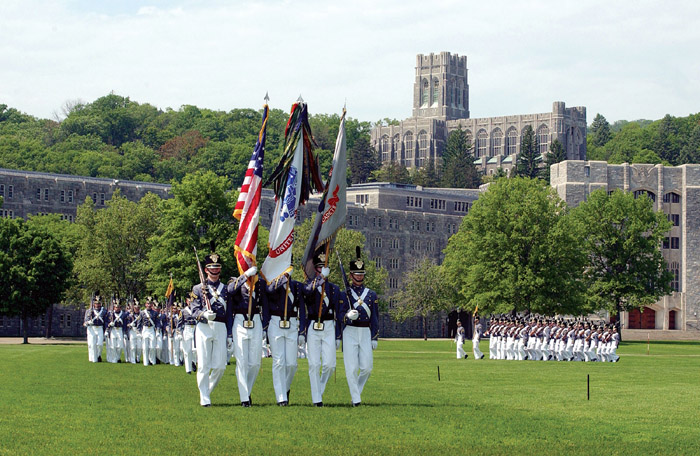
West Point Military Academy, New York, courtesy Britannica.com
The Strategic Importance of the Oldest Fortifications
While the majority of U.S. bases were built during the early years of the 20th century to prepare for world wars, some garrisons date back to the 1800s when they were established as barracks, training grounds, and storage depots for the permanent U.S. Army, which was created after the Revolutionary War. The earliest of these military bases is West Point, New York, which, as the oldest army garrison recognized by the U.S. Army, has been continuously inhabited and in use for military purposes for almost 250 years. At the time of its conception, the site along the Hudson River was considered by George Washington to be the most strategic position in the country, and designs for the base were first drawn up in 1778. As well as forts, a huge 150-ton chain made of iron was extended across the river to Constitution Island, and this prevented the British from ever capturing West Point.
Exponential Expansion of the Largest Military Base
Spanning over 250 square miles and currently housing nearly 60,000 personnel, Fort Bragg, recently renamed Fort Liberty, is the largest military base in the U.S. and one of the largest in the world. Initially established in 1918 as an artillery training ground, it was one of three training camps in North Carolina, but the only one to remain operational after World War I and become a permanent military base. Since then, it has continued to expand exponentially and has been used as a base for training soldiers during World War II. It became known as the Home of the Airborne when the 82nd Airborne Division was stationed there permanently, and it also served as the headquarters for Special Forces soldiers as it expanded further during the 1950s. During World War II, personnel numbers reached a peak of almost 160,000. While it is smaller in area, Fort Campbell in Kentucky, established in 1942 as an armor training and mobilization camp, now houses over 250,000 service members and civilians and is considered to be the second-largest base in the U.S.
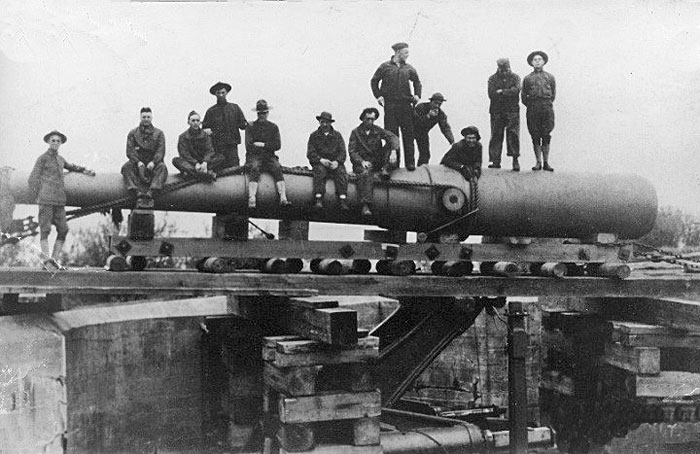
Big guns at Fort Mott, New Jersey.
From early fortresses built during the War of Independence to prominent naval bases that played a vital part in World War II, several substantial and historically significant military installations stand out for their strategic importance. Temporary barracks were built quickly to house mobilized troops at the start of World War II, while other renowned bases such as West Point have grown slowly over decades to become well-established as some of the most important in the world.
©Jackie Edwards, for Legends of America, April 2024.
About the Author – Jackie Edwards was a mining engineer before becoming a semi-retired freelance writer.
More from the Author:
Three of the Most Celebrated Gardens in American History
Revitalizing Abandoned Coal Mining Towns: Exploring Opportunities for Repurposing and Sustainability
The Bell Witch: Tennessee’s Most Haunting Legend
From the Golden Age to Today’s Modern Marvels: The History of America’s Sports Cars
The Significance of Tags, Badges, and Insignia During the American Civil War
How Dearborn Put The World on Wheels
Notable and Historic U.S. Military Bases
The Impact of Canals on the Development of 19th-Century America
Also See: