
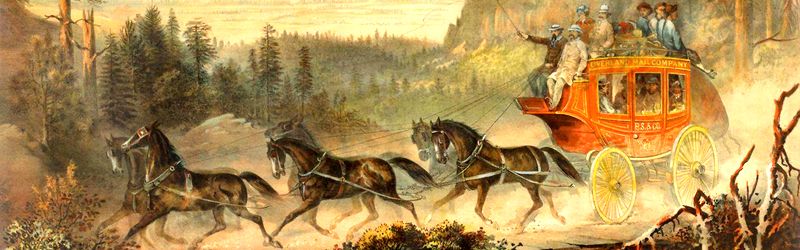
Mountain Stagecoach by Rey Britton and Co.
Statesmen and warriors, traders and the rest,
May boast of their professions and think it is the best;
Their state I’ll never envy, I’ll have you understand,
Long as I can be a driver on the jolly “Overland.”
— Nat Stein, 1865
Though the job of a stagecoach driver may not initially seem as dangerous as some professions in the Old West, such as working as a cowboy, gambler, soldier, or lawman, this profession did require a bold and strong character. From the earliest days of stage-coaching, these many men and women, who went by several nicknames such as “whip,” “Charlie,” “jehu,” reinsman, and others, have been likened to the Roman chariot racers of centuries ago. Not just anyone could handle the job that required excellent horsemanship, driving skills, and often great courage as they traveled through hostile Indian country and were the constant target of bandits.
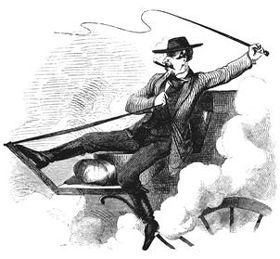
Stagecoach Driver
The many stage routes covered terrain on often narrow and rugged trails through deep sands, endless mud, and steep inclines.
Though there were far more men in the profession, women, such as Charley Parkhurst, Mary Fields, and Delia Haskett Rawson, acted as stage drivers. Regardless of gender, most all were under the age of 40. On some routes, each driver would have their section, which they would drive over and over, generally covering about 50 miles.
The drivers controlled the teams using the reins and their whips, often made to their specifications. If their coaches carried the U.S. Mail, they were required to swear the “Oath of Mail Contractors and Carriers.” Often carrying valuable freight, especially around mining camps, shotgun messengers rode with the stage to protect the cargo and passengers.
The owners and operators of the stage lines, who stood to make or lose the most money, were referred to as “Stagers.” Unfortunately, the “staging” business was unprofitable for many of these transportation entrepreneurs, and they wound up in bankruptcy. However, though they may have changed their business focus, American Express and Wells Fargo continue to operate today.
Stagecoach Companies and Drivers:
A. J. Oliver & Co’s Bannack & Salt Lake Express (1862-1866) – Organized by A.J. Oliver, E.A. Conover, and Ed House, the company initially ran stage wagons between Bannack and Virginia City, Montana, operating under the name of A.J. Oliver & Company. They extended their line, running mail and passengers between Salt Lake City, Utah, and Bannack, Montana. In 1864, they were awarded a mail contract between Virginia City and Helena, Montana. The line was sold to Holladay Overland Mail & Express Company in 1866.
Ackley and Morrison (1849-1850) – In 1849, the line was known as Maurison & Co’s Express and ran from Stockton, California, to the Stanislaus Mines. In 1850, it became known as Ackley and Morrison and began to run between San Francisco and San Jose, California.
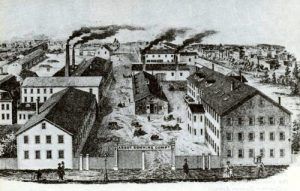
Abbot Downing Company.
Abbot Downing Company (1827-1847, 1865-1919) – The maker of the world-renowned Concord Stage, the organization built thousands of stagecoaches during their many decades in business.
American Express (1850-present) – American Express was formed when three competing express and stage companies merged in 1850. Because the organization expanded into new markets, it still exists today.
Alexander & Banning Stage Line (1851-1860’s) – In 1851, Phineas Banning began the first stage line in southern California, between Los Angeles and San Diego. He soon partnered with D.W. Alexander and expanded the line into San Buenaventura (now Ventura), Santa Barbara, San Luis Obispo, and Wilmington. Alexander sold his interest in 1855, but Banning continued, becoming a famous whip. By the 1860s, Banning wagons traveled to Salt Lake City, the Kern River goldfields, the new military installation at Yuma, Arizona, the Mormon settlement at San Bernardino, and in an arc around the Southern California region.
Barlow & Sanderson Company (1862?-1881?) – Starting in Missouri during the Civil War, the company moved westward, concentrating on Colorado during its booming mining days.
Phineas Banning (1830-1885) – With his partner, George Alexander, Banning operated the Alexander & Banning Stage Line, a successful freight and stage line in the Los Angeles, California area, that also made trips to places such as Yuma, Arizona, and Salt Lake City, Utah.
John Braden (18??-1896) – Working for various stagecoach outfits for several decades before settling down in Albuquerque, New Mexico. Braden died a hero when he saved several people from a burning wagon.
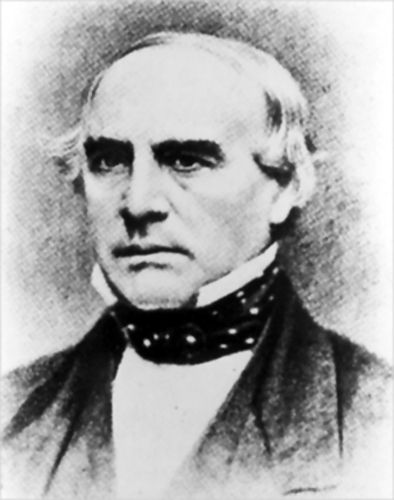
John Butterfield.
John Butterfield (1801-1869) – Getting his start as a stagecoach driver at the age of 19, Butterfield parlayed his shrewd business sense to own and operate American Express and the Overland Mail Company.
Butterfield Overland Despatch (1865-1870) – Initially developed by David A. Butterfield in 1865 on the Smoky Hill Trail, the line ran from Atchison, Kansas, to Denver, Colorado.
Butterfield Overland Mail Company (1858-1861) – The brainchild of John Butterfield (no relation to David A. Butterfield), the stage company was owned by American Express and held the largest mail contract ever granted by the U.S. Government.
Cannonball Stage – Operated by a flamboyant and colorful man named Donald R. “Cannonball” Green, the Cannonball Stage Line connected the railroad to towns across southwestern Kansas and into the untamed red lands of Oklahoma.
Central Overland California and Pike’s Peak Express (C.O.C. & P.P.) (1860-1861) – A mail, freighting, and passenger carrier between St. Joseph, Missouri, and Denver, Colorado, it was also the parent company of the Pony Express.
Cheyenne & Black Hills Stage Line (1876-1886) – More familiarly called the “Deadwood Stage,” the route operated between Cheyenne, Wyoming, and Deadwood, South Dakota.
William “Buffalo Bill” Frederick Cody (1846-1917) – Buffalo Bill was a freighter, cattle driver, Pony Express rider, stagecoach driver, Civil War soldier, buffalo hunter, and army scout before he began entertaining great numbers of people in his Buffalo Bill’s Wild West Show.
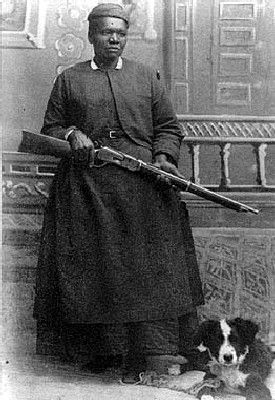
Mary Fields.
Mary Fields, aka Stagecoach Mary (1832-1914) – Born as a slave in Tennessee, Fields was one of the first women entrepreneurs, stagecoach drivers, and pioneers of the American West.
Clark “Old Chieftain” Foss, aka Old Foss (1819-??) – A boisterous and colorful driver, Foss ran a stage through Napa Valley, California, during the 1860s and took many sightseers to the famed geysers in the Calistoga and Geyserville area.
George “Baldy” Green – One of the most popular stage drivers in the Sierra Nevadas, his stages were so prone to robbery that he was finally let go.
Charles C. Haynes (1837-??) – One of the most prominent drivers on the Overland Stage Line, Haynes drove for 20 years.
Ben Holladay (1819-1887) – Holladay began several stagecoach routes and became known as the “Stagecoach King.”
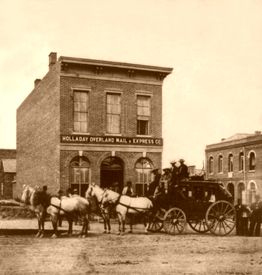
Holladay Overland Mail and Express Company, about 1865
Holladay Overland Mail and Express Company (1866) – Ben Holladay bought out the Overland Mail and Express Company in 1866, but just months later, he sold it again to Wells Fargo.
Leavenworth & Pike’s Peak Express Company (1859) – Developed by W.H. Russell of the famous transportation firm of Majors, Russell, and Waddell, Russell wanted to serve the many prospectors flooding the Colorado Gold Rush. The line, however, soon failed due to a lack of financing and frequent Indian attacks.
Majors, Russell, and Waddell (1854-1862) – A freighting and staging firm based in Lexington, Missouri, this partnership was between William Hepburn Russell, Alexander Majors, and William B. Waddell. Getting its start in 1854 to supply military posts in the American West, the company played a significant role in the history of transportation in the Great Plains. It would later operate various transportation and communications services, including stagecoach services, private express mail service, and the brief operation of the Pony Express.
James Wales Miller – A stagecoach driver for Wells Fargo who saved a $30,000 payroll from robbery.
Henry James “Hank” Monk (1833-1883) – One of the most famous stagecoach drivers in the American West, Henry James Monk, was made famous in 1859 after giving a wild and furious ride to Horace Greeley.
George “Alfred” Monroe (1844-1886) – Born a slave, Monroe later became one of the most skilled “whips” in the American West. A mulatto, he gained renown for driving stages for United States presidents.
Charley Parkhurst, aka One-Eyed Charley, Mountain Charley, Six-Horse Charley (1812-1879) – Parkhurst was a female tobacco-chewing, cussing, gambling California stage driver.
Charles “Charlie” E. Parks (18??-1907) – Parks was one of the most faithful and capable Pony Express riders before becoming a long-time defender of Wells Fargo stages.
Delia Haskett Rawson (1861-1949) – Becoming a driver at 14, Delia was the first female stage driver and maybe the youngest to carry the U.S. mail in California.
William Trotter (1836-??) – Trotter was a stage driver for two decades before settling down and running a hotel.

Wells Fargo Stagecoach.
Wells, Fargo, and Company (1850-present) – The organization began when prosperous New York businessmen Henry Wells and William Fargo saw a great opportunity in the West after discovering gold. The pair, who had helped to found American Express in 1850, officially created Wells Fargo & Co. on March 18, 1852, with two primary objectives – transportation and banking. The firm survived through diversification and continues to exist today.
© Kathy Alexander/Legends of America, updated January 2025.
Also See:
Stagecoaches of the American West