
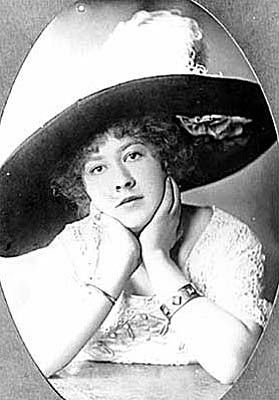
Irene Love.
“Working girls” in Deadwood, South Dakota, were as prominent a fixture as that of the many miners in the bustling boom camp. Though these “ladies” most likely arrived almost as soon as the first man, the first record of prostitutes coming to Deadwood was in July 1876. Arriving with Charlie Utter’s wagon train, along with Wild Bill Hickok and Calamity Jane, were several “professional” women, including two madams who went by the names of Dirty Em and Madam Mustachio. The two seasoned veterans had previously worked in many California and Nevada mining camps. The miners were so pleased to see the women that they lined up along the street and cheered.
A thriving industry in the camp dominated almost entirely by men, in 1876, it was estimated that approximately 90% of women of the camp were “painted ladies.”
Difficult for a woman to make a living in the American West during these times; many single women or those who had lost husbands or fathers to provide for them were almost forced into prostitution to support themselves.
In other cases, such as that of Al Swearengen and the Gem Saloon, unsuspecting women were lured to Deadwood with the promise of respectable employment, only to find themselves stranded without money or means and other options, virtually enslaved in the dance halls or brothels.
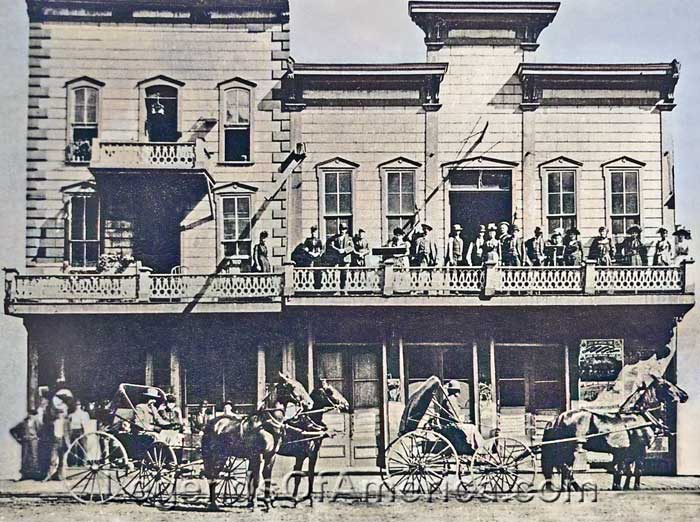
Gem Variety Theatre in Deadwood, South Dakota.
These many women not only charged for sexual favors but also hustled drinks, sold “dances,” and were sometimes stage performers.
Confined mainly to the Badlands district at the north end of town, saloons and theaters usually occupied the first floors, while the brothels operated upstairs. By the turn of the century, the Badlands occupied an entire block of two-story buildings on the west side of Main Street.
Often, these women faced violence and turned to drugs and alcohol as a means of escape. Opium, laudanum, and morphine, with laudanum being the most often used. Unfortunately, doctors often started the “girl” use of the drug to reduce the number of calls he would receive. At other times, it was their employers who got them started on the drugs to control them better. Suicides were common in the camp, and Dr. F.S. Howe, the only doctor in Deadwood during its earliest days, always carried his stomach pump when summoned to the Badlands in the middle of the night.
Having little protection from the law or anyone else, the women were often abused by their customers and employers. On one occasion, a Gem Theatre prostitute named Tricksie shot a man through the head after he beat her up. When Howe arrived, he was amazed that the man was still alive, even after putting a probe through his head. However, this nameless man died about thirty minutes later.
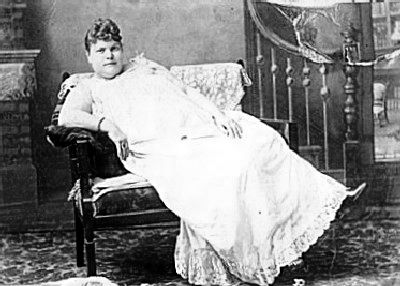
Deadwood Prostitute.
The men, too, were often at risk as prostitutes sometimes helped themselves to any gold, money, or valuables that might have been in their pockets. However, this was generally not the case as most women prospered, at least initially, due to the high demand for their “services.”
Though they didn’t keep official records of their business dealings and financial affairs, they were generally paid in gold dust, worth about $20 an ounce when those first “sporting girls” arrived. Outnumbering the girls 200 to 1, the men quickly provided a pinch or two of dust for female companionship. When “services” were not initially available, the “pinches” were bigger. Rumors of the time suggested that the youngest and most beautiful girls sometimes received as much as three ounces of gold dust.
Before permanent buildings were erected, much of the business was conducted inside tents or covered wagons. Still, it didn’t take the Madams long to establish regular brothels where the women could work.
The Madams made money from the 40% share she took from the girls, but even more so from the sale of liquor. Visitors to the “house” were “expected” to buy a drink and purchase another for any “lady” they might be spending time with.
For her share of the take, the Madam provided room, board, and “protection” to her girls; however, the women were required to pay for their own clothing and personal necessities.
As prostitution waned in nearby areas when laws were passed and “proper” women charged forward to ensure compliance, Deadwood’s “service businesses” continued to thrive. It was so profitable that many madams began having branch houses in nearby Belle Fourche, Sturgis, Keystone, Custer, Hay Camp (later known as Rapid City), and other areas. There was even a floating barge brothel on the Belle Fourche River to the north.
When the gold rush was over, the girls remained, and the houses were one of the primary supports of the local economy through Prohibition and the Depression. The upstairs floors on Main Street were as integral to Deadwood as the legends of Wild Bill Hickok and Calamity Jane.
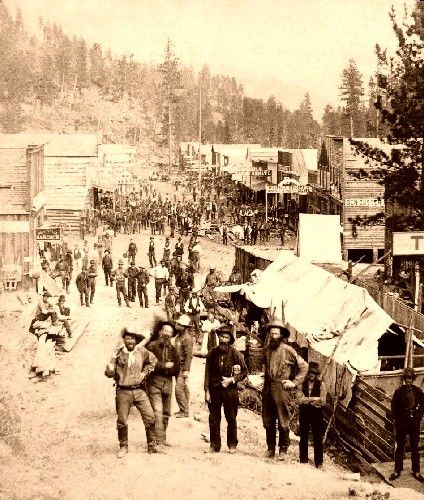
Deadwood, South Dakota from the south, 1876.
Despite state laws forbidding prostitution, no city ordinance was ever passed in Deadwood to outlaw the practice. For decades, the prostitution business went on with little interference from the outside world and little care by the locals for what the rest of the nation might be doing. Only briefly did they close, in 1952, when an ambitious young attorney and newcomer to Deadwood was elected as States Attorney. He soon raided the houses and closed them down; however, not only did his move fail in furthering his ambitions, but the houses were reopened just six months later due to technical issues. When he ran for reelection soon after the abortive attempt, he lost.
For another 28 years, the brothels continued to prosper until 1980, when the FBI raided them. The alleged cause was rumors that girls as young as 14 were being “sold” by biker gangs. After grabbing the girls and placing them in vans, the authorities then padlocked the four remaining open brothels.
But, the people of Deadwood were stumped as to the brothels’ closings, asking the proverbial question, “Why?” The Deadwood police chief replied: “I haven’t the foggiest.” Then, “I suppose it was because we hadn’t done anything about it before.”
Most residents hoped the 1980 closing would “go away,” as support for the “girls” went far beyond tolerance, insisting that they contributed to the city’s economic base. One businessman said of the affair: “They’re a public service, not a public nuisance.”
However, to ensure prostitution wasn’t revived in Deadwood, officials were said to have continued to occupy the upstairs apartments on Main Street for years afterward.
After over a century, a Deadwood institution had been closed forever, and most out-of-work girls moved on. Though the sporting ladies of the gulch may be gone, they are not forgotten as Deadwood continues to celebrate them in parades, stories, and musical revues.
Madam Dora DuFran – The Black Hills’ Leading Madam

Dora DuFran.
Though most “sporting girls” who worked in Deadwood remain nameless, others, such as Madame Dora DuFran, were more notable. An immediate success once she arrived in Deadwood, she continued to build her business until she soon had “branch” houses in Sturgis, Rapid City, and Belle Fourche.
Born in England, Dora eventually immigrated to Nebraska with her parents. A good-looking girl in her youth, she arrived in Rapid City as Amy Helen Dorothy Bolshow and began working as a dancehall girl. However, by the time the gold rush was on in Deadwood, she had obviously “promoted” herself to a full-scale madam.
Sometime after moving to Deadwood, she married Joseph DuFran, a personable gentleman gambler who wasn’t bothered by her profession and helped her grow her business.
In her early days in Deadwood, she became a friend and occasional employer to Calamity Jane, who sometimes worked as a prostitute. She was also said to have had a “heart of gold,” often providing nursing services to those who needed it and helping the poverty-stricken.
One of Dora’s most popular houses, “Diddlin’ Dora’s,” was in Belle Fourche on Fifth Avenue. However, the street was so lined with saloons with brothels on the second story that it was more commonly referred to as “Saloon Street” by the many cowboys who frequented its businesses. Diddlin’ Dora’s advertised itself as “Three D’s – Dining, Drinking, and Dancing – a place where you can bring your mother.” And though the cowboys frequented the popular place, most just wanted to “get down to business,” with at least one man remarking, “I wouldn’t want my mother to know I had ever been there.”
By the turn of the century, Dora was still going strong when a worn-out Calamity Jane returned to the Black Hills for the last time in 1903. In the final stages of raging alcoholism and carrying her pathetically few belongings in a dilapidated old suitcase, she found refuge at Madam DuFran’s brothel in Belle Fourche. Jane earned her keep for the next few months by cooking and doing the laundry for Dora’s brothel girls before she died on August 2, 1903.
In 1909, Dora’s husband Joseph died at age 47 and was buried at Mt. Moriah Cemetery. Afterward, Dora returned to Rapid City, where she set up another wildly popular brothel, especially during Prohibition, as it also served as a speakeasy. One often-repeated story of those prosperous times was when a flood stranded several Rapid City businessmen at Dora’s brothel. When their wives heard the shocking news, they reportedly confronted their husbands with a host of weaponry, including rolling pins and umbrellas, once the water had receded and the men could escape.
Dora DuFran died of heart failure on August 5, 1934, at the age of 60. She was buried at Mount Moriah next to her husband and a beloved pet parrot who had preceded her in death. Her obituary in the Black Hills Pioneer mourned the passing of “a noted social worker.” Her grave is marked by four urns featuring grinning imps, symbolizing the four brothels she owned.
Mollie Johnson – Queen of the Blondes
Known as “Queen of the Blondes” in Deadwood’s early days, Mollie Johnson ran a brothel at the corner of Sherman and Lee Streets. Johnson had a knack for flaunting her profession by renting a $10 an-hour carriage and riding up and down the main streets of the camp, snubbing not only the few “proper ladies” that might be out on the streets of Deadwood but also the other “sporting ladies” who didn’t work for her, were not as prosperous, or, in her opinion, were not as beautiful.
Her antics soon made her a popular headline item in the many newspapers of Deadwood, which scorned her one day and reported on her every little activity the next.
Her first appearance in the local news was in February 1878 when she married “Dutch Ni**er” Lew Spencer, a black minstrel and comedian, who was playing at the Bella Union Theater. This surprised Lew’s friends, who couldn’t picture him as a married man. However, their “marriage” was anything but typical, as Mollie continued her profession and, as the camp watched, didn’t “act” much like any other married woman.
Three golden-haired protégés worked for Mollie, whom she led about town in her many activities – Ida Clark, Ida Cheplan, and Jennie Duchesneau. 1878 was a busy year for her and “the girls” as Mollie hosted several dances and “balls” in the firehouse and various camp warehouses. Though the newspapers reported these events as “parties” and “grand dances,” they were, no doubt, marketing opportunities for the “business.”
On another occasion, the tabloids of Deadwood told of a buggy race between her girls that occurred on the flat prairie between Crook City and Deadwood. When Mollie and the rest of the women attended a baseball game at Fort Meade, they abundantly imbibed the “hooch,” the next thing you know, they had rented two light buggies and decided to race. However, with the women’s lack of driving experience and in their drunken state, the two buggies soon collided in a heap of petticoats and splinters.
The papers also noted any incident between Mollie and the rival “houses” in the camp, often attempting to create a “catfight” between them by printing seemingly inaccurate or exaggerated material. On one occasion, when the Times reported the arrest of three of Mollie’s competitors for selling liquor without a license, they accused Mollie of providing the information that got them arrested. The article read, in part:
“[Mollie] caused the corralling of her lascivious sisters, and it was the opinion of the average rounder that Madam Mollie is fixing up a good pounding for herself—by the trio of female sinners referred to.”
The very next day, an incensed Mollie sent a note to the Times stating:
“I know nothing of the ladies referred to. I am the last one to do injury to these ladies, or as you say, my sisters in sin.”
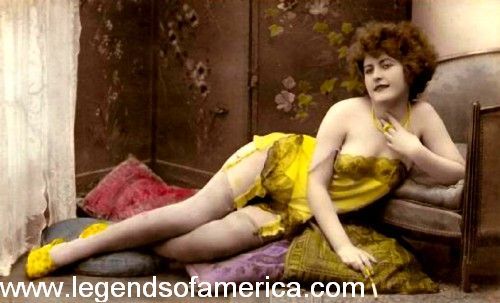
Soiled Dove.
As Mollie and her “ladies” went on about their business in Deadwood, the minstrel, “Dutch Ni**er” Lew Spencer, traveled to Denver, Colorado. Imagine Mollie’s surprise when the newspapers reported in 1879 that her husband, Lew Spencer, had fatally shot his “wife” in Denver. Spencer was sent to prison for the offense but would later be released and go on to record the earliest known version of A Hot Time in the Old Town in 1896.
Undaunted, Mollie went on about throwing her raucous parties for her admiring and paying friends. Though scorned by many in Deadwood and arrested several times for selling liquor without a license, Mollie’s business continued to thrive until November 1879, when much of Deadwood would burn to the ground.
As the fire spread, Mollie had ample time to remove her furniture and possessions from the “house” on the corner of Sherman and Lee Streets. However, she refused to move until one of her “girls,” Jennie Phillips, was “safe.” While this might not sound unusual at first glance, poor “Jennie” was already dead, having passed away the day before and resting in a coffin in Mollie’s parlor. As the roof of Mollie’s house burst into flames, Jennie’s coffin was safely brought out, and Mollie lost everything.
Wasting no time, Mollie started up again, but within the next year, she would be plagued by two more fires—one in the chimney and another in an upstairs bedroom. However, these mishaps failed to shut her down, as the 1880 territorial census reports that Mollie Johnson was running a boarding house where she and five other young ladies resided. The census also reported that she was born in Alabama, was a widow, and was 27 years old.
The newspapers continued to report her antics and grand balls for the next two years until a final headline stated that Mollie Johnson left Deadwood in January 1883. What happened to Ms. Johnson beyond Deadwood is seemingly lost in history.
Inez Sexton – Escaping the Trade
Another woman who made herself notable for not joining the ranks of the soiled doves was Inez Sexton. In the early 1880s, Sexton made the dire mistake of falling for Al Swearengen’s ruse to attract women to the Gem Theatre. The scoundrel Swearengen was notorious for advertising in the East for “stage performers,” offering high wages and paying to bring them West. However, when they arrived, they would find that the duties differed. Virtually enslaving the often penniless women who arrived in the camp with no way home, Sexton, when she figured out that Al’s real intent was to turn him into a prostitute, gave him a piece of her mind, screaming, “Although my voice is for sale, nothing else is!” She then stomped out of the saloon. Without money to return home, the respectable ladies of Deadwood soon arranged a benefit to earn the fare.
©Kathy Alexander/Legends of America, updated March 2025.
Also See:
HBO’s Deadwood Series – Fact & Fiction
Painted Ladies of the Old West
Pearl de Vere – Soiled Dove of Cripple Creek
See Sources.